Creative Directors: It's 2026. Your Workflow Called. It's Embarrassed.
The creative director who hasn't updated their workflow since 2019 is not protecting creative integrity. They're just slow. In 2026, AI is not a threat to good creative direction – it's a diagnostic tool that reveals whether the direction was ever that good to begin with.
Insights
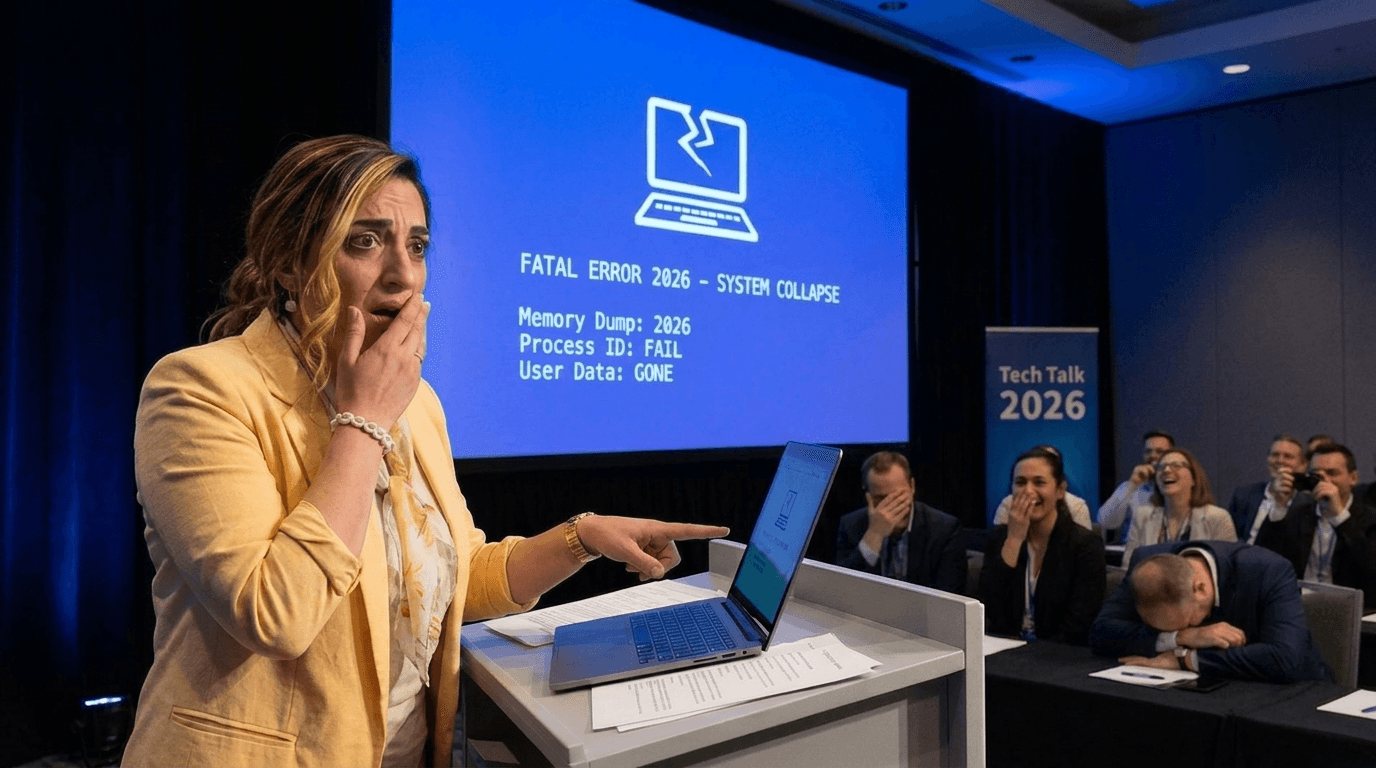
There’s a particular scene playing out in creative departments right now.
A creative director is on their third Slack thread of the morning, waiting on a copywriter to finish the third round of headline options for a brief that was straightforward.
The designer is waiting on the copy.
The strategist finished their piece two days ago.
The client presentation is Thursday.
Meanwhile, two junior team members have quietly been using AI tools to compress their portion of the work by about half. They haven’t said anything. They’re not sure how the CD will react.
The CD is asking if anyone has heard back from the freelancer they hired for research.
This is not a story about AI being miraculous.
It’s a story about a workflow that has calcified, and a leader who hasn’t noticed yet.
The creative director role has always been about orchestrating the right people, tools and thinking to produce the best work. The brief gets interpreted, the team gets directed, the output gets shaped.
That hasn’t changed.
What has changed is the toolkit available to run that orchestration, and the speed at which everyone else is adopting it.
Ignoring AI doesn’t protect the integrity of the creative process.
It just makes that process slower, more expensive and less competitive than it needs to be.
“AI has made the question ‘Can we make it?’ much less interesting. The better question is ‘Should we make it?’”
There’s no version of 2026 in which a creative director who hasn’t developed real AI literacy is operating at full capacity.
That’s not hype.
That’s just arithmetic.
What Does “AI Knowledge” Actually Mean for a Creative Director?
For a creative director, AI literacy is not about learning to code.
It is not about prompting an image generator for fun and posting the results.
It is about understanding where AI fits inside the creative production system, and how to direct it the same way you direct a team.
That distinction matters because a lot of creative directors have dismissed AI after a surface-level experience.
They tried a chatbot, got a mediocre headline and concluded that AI doesn’t understand nuance.
They’re right that the output was mediocre.
They’re wrong about the conclusion.
A mediocre brief produces mediocre work from humans too.
The problem was the input, not the tool.
AI literacy for creative directors means understanding four things:
1. What AI can do well.
Research compression, first-draft generation, rapid variation, structured content, translation, transcription, data synthesis, image ideation, copy testing and asset production.
2. What AI does badly without direction.
Strategy, judgment, taste, brand-specific nuance, audience empathy, narrative architecture and creative risk.
These are not gaps that will close on their own.
They are the places where a creative director earns their title.
3. How to write a brief that works for AI.
The same way a bad brief produces bad work from a designer, a vague prompt produces vague output from an AI system.
The skill of briefs transfers directly.
4. How AI fits into the workflow, not just the output.
AI isn’t a finishing tool or a novelty layer.
It’s a production accelerator that belongs inside the workflow at multiple points.
Knowing where those points are is a competency, and right now it’s an undervalued one.
Creative directors don’t need to become AI engineers.
They need to understand AI well enough to direct it with the same authority they direct a photographer, a copywriter or a strategist.
That’s it. That’s the ask.

What Workflow Is Nobody Talking About?
There is a version of the creative director workflow that most people running creative departments have not yet built.
The difference between the 2019 model and the 2026 model isn’t that AI replaced people.
It’s that the 2026 model moved several time-consuming tasks off the human critical path.
Here’s what that comparison actually looks like.
Stage | 2019 Model | 2026 Model |
|---|---|---|
Research and audience analysis | Human team, 2–5 days | AI-assisted synthesis, 3–6 hours, human review |
Brief writing | CD writes or edits from scratch | CD writes with AI-generated structural draft |
First-round concept options | Copywriter + designer, 3–5 days | AI-assisted ideation session, CD shapes and selects |
Copy variations and testing | Multiple freelancer rounds | AI drafts, human editors refine |
Asset production for channels | Separate production cycle | AI-assisted adaptation from master assets |
Revisions and client iterations | Full team cycle | Targeted human revisions on strategic decisions |
Reporting and performance analysis | Specialist or agency | AI-assisted analysis, human strategic interpretation |
The time savings in this model don’t go to fewer people.
They go to better work.
When research takes hours instead of days, the strategy improves because there’s more time to interrogate it.
When first-round concepts arrive faster, there’s more room for iteration.
When asset production is less of a bottleneck, campaigns can respond to what’s actually working.
The creative director in this model isn’t doing less.
They’re doing more of the things only they can do, and less of the administrative drag that used to slow every phase down.
“AI should reduce work, not create more mess. If your workflow has more steps now than it did before you introduced AI, something went wrong in the implementation.”
The 2026 workflow isn’t a different philosophy.
It’s the same philosophy with better infrastructure underneath it.
Why Are Creative Directors Stalling?
Let’s go through the objections.
Charitably but honestly.
“AI kills creativity.”
This is the most popular one.
It has the benefit of sounding principled.
The argument is that AI-generated work is homogenized, derivative and soulless.
That’s true of poorly directed AI work, in the same way it’s true of poorly directed human work.
The creative director who uses AI to generate three undifferentiated concept options and presents them without judgment isn’t using AI to kill creativity.
They were already producing undifferentiated work.
AI just did it faster.
Great creative direction doesn’t become less great because better tools exist.
It becomes more visible, because now there’s less excuse for the work being slow and expensive on top of being mediocre.
“It’s not ready.”
This objection had merit in 2022.
In 2026, AI tools are embedded in production software, agency workflows, in-house teams and client-side marketing departments.
“Not ready” now means “I haven’t looked recently.”
“We tried it.”
Usually means someone on the team used a free tool for an afternoon and produced something underwhelming.
This is like saying photography isn’t ready because a disposable camera didn’t produce a campaign-worthy image.
AI implementation is a skill.
It requires setup, context, iteration and the same quality threshold applied to any other production process.
Trying it once and concluding it doesn’t work is not a trial.
It’s avoidance with extra steps.
“I don’t want my team to lose skills.”
This one is worth taking seriously for approximately sixty seconds.
Then consider:
Creative directors have never required their teams to produce work by the most time-consuming method available.
Nobody insists on hand-setting type because it builds character.
Skills evolve with tools.
The underlying creative judgment is the skill worth protecting.
The method of getting to a draft is not sacred.
“Clients don’t want AI work.”
Clients want work that performs.
If AI-assisted work performs, clients will want it.
If it doesn’t, they won’t.
The tool doesn’t change the accountability.

What Changes When a Creative Director Actually Gets Good at This?
The practical upside of AI literacy isn’t abstract.
Here’s what actually shifts.
Briefs get better.
When a creative director can use AI to rapidly synthesize competitive landscape, audience research and prior campaign performance before writing a brief, the brief contains more useful information.
Better briefs produce better work.
This is one of the highest-leverage improvements available and it requires almost no investment to start.
Iteration gets faster.
One of the most expensive parts of any creative process is the gap between concept and first visible option.
AI compresses that gap.
When a team can see ten directional concepts in the time it used to take to see three, the conversation about which direction to pursue is earlier, better informed and cheaper to course-correct.
Budget goes to the right things.
When production tasks that used to require specialist time are partially automated, budget moves toward the phases that produce the most differentiation.
Strategy. Craft. Judgment.
The things a client actually can’t get from a template.
The CD becomes a better director.
This is the one people don’t talk about enough.
When AI handles first-pass production, the creative director spends more time in the editorial and strategic role.
That’s where the title actually earns its keep.
The creative director who has always been great at judgment and direction gets to exercise that judgment more often.
“Good creative should make money. AI is a production tool, not a creative substitute. The difference matters for what you put your energy into.”
Human judgment becomes more valuable, not less.
When AI can produce competent, directionless work at scale, the ability to tell the difference between competent and excellent becomes the scarce skill.
That ability lives in the creative director.
It always has.
Make better decisions earlier.
That phrase applies here more precisely than anywhere else in the creative process.
The director who understands AI can make better decisions about direction, resources and time before the expensive production phases begin.
How Do You Actually Build AI Into Your Creative Workflow?
Not a tool list.
A mental model.
The most common mistake creative directors make when implementing AI is treating it as a finishing tool — something you apply at the end of a process to speed up production of something already decided.
That approach produces limited value and a lot of frustration.
The more useful mental model is:
AI is a thinking partner at the early stages, a production accelerator in the middle stages, and a quality-control surface at the final stage.
Stage 1: Before the brief
Use AI to synthesize research quickly.
Competitive audit. Audience analysis. Category review.
The goal is to enter the brief with better-quality information in less time.
This is not outsourcing thinking.
It’s accelerating the input stage so the thinking starts with more material.
Stage 2: Inside the brief
AI can generate structural drafts, identify gaps and pressure-test creative territory by generating adjacent examples.
The creative director then applies judgment to select, reject and sharpen.
Stage 3: First-round ideation
Run AI-assisted ideation sessions before the broader team starts building.
Generate twenty directional options in the time it used to take to get to five.
Then bring human craft to the best three.
The team isn’t replaced.
They’re given a better starting point.
Stage 4: Production
AI-assisted asset adaptation, copy variation and format resizing are table stakes now.
This is where significant time is recovered.
Stage 5: Review
AI can flag inconsistencies against brand guidelines, check copy against tone requirements and identify asset gaps before client delivery.
It won’t replace the human quality pass.
It will catch the things that fall through the cracks at 11pm before a deadline.
Don’t guess which of these stages would benefit most in your specific operation.
Understand the workflow first.
Then identify the highest-friction points.
Then implement.
What Happens to the Creative Director Who Waits?
Here’s the matter-of-fact version.
The creative director who waits loses their competitive position incrementally.
Not all at once.
Not dramatically.
First, the turnaround times start looking slow next to competing options.
Clients don’t always say it directly.
They start asking if there’s a way to move faster.
The answer the team gives is:
“We’d need more budget or more time.”
That answer used to be sufficient.
Now it’s just the answer of someone who hasn’t looked at the available options.
Then the budgets start going elsewhere.
Not because the creative is bad, but because someone else is producing comparable creative faster and cheaper, which means the remaining budget goes further with them.
Then the team starts leaving.
Junior creatives who have developed real AI skills don’t stay in environments where those skills are suppressed or ignored.
They go where the infrastructure supports the way they actually want to work.
None of this is catastrophic.
It’s gradual.
Gradual is harder to see and harder to reverse.
The creative director who waits isn’t making a principled stand.
They’re making a slow exit.
Frequently Asked Questions
Is AI replacing creative directors?
No.
AI is replacing the parts of the creative director role that were never really about creative direction in the first place: research assembly, production administration and first-draft generation.
The judgment, strategy, leadership and taste that define excellent creative direction are not replicable by current AI systems.
What is happening is that creative directors who rely primarily on the administrative parts of the role for their relevance are finding the ground shifting.
Directors who lead with judgment are finding AI makes them more productive.
What AI tools should creative directors learn first?
Start with the category you already understand, not the category that sounds most impressive.
If briefs and strategy are your primary work, start with large language models for research synthesis and brief drafting.
ChatGPT, Claude and Gemini are all viable starting points.
If your work is primarily visual, experiment with Midjourney, Adobe Firefly or DALL-E for ideation-phase concept generation.
The goal in the first stage is not mastery.
It is orientation: understanding what these tools can and can’t do with real creative tasks.
How does AI change the creative director’s role?
AI shifts the creative director’s time toward the highest-value activities.
Strategy, judgment, direction, quality control and leadership become a larger percentage of the role because AI is absorbing some of the time previously spent on production administration and first-draft generation.
The result, for directors who adapt, is a role more concentrated on the things that were always most important.
For directors who don’t, it’s a role that starts looking slower and more expensive than alternatives.
What does a 2026 creative director workflow look like?
A 2026 creative director workflow integrates AI at multiple points:
Research and synthesis before briefing
Ideation assistance during concept development
Production acceleration during asset creation
Consistency checking before delivery
The human critical path is reserved for strategy, judgment, direction and the decisions that require genuine creative leadership.
The overall effect is faster cycles, more iteration capacity and better allocation of human skill.
Do creative directors need to know how to code to use AI?
No.
Coding is not required.
The relevant skill is the ability to brief AI tools with the same precision used to brief a human team member.
Clear context, defined objectives, explicit constraints and a quality threshold for review.
Creative directors who write good briefs for people adapt quickly to briefing AI systems.
The underlying skill set transfers directly.
How do I convince my team to change our creative workflow?
Show them the time math.
Take one real workflow from your current operation and map where the hours go.
Then identify two or three stages where AI assistance is demonstrably faster.
Run a controlled experiment on a real project.
Don’t ask the team to believe in AI in the abstract.
Show them what a faster research phase or a stronger first-round ideation session actually produces.
People adapt to tools that make their work better.
They resist mandates that feel like criticism of how they currently work.
The implementation conversation should be:
Here’s what we can do faster, which means we have more time for the things we’re actually best at.
How does AI affect creative quality?
Poorly implemented, AI introduces volume without quality.
Well implemented, AI improves quality by creating more room for iteration, more time for strategy and more budget available for the craft elements that actually differentiate the work.
Quality is a product of direction, not of tool selection.
AI doesn’t produce quality. A well-directed creative process does, and AI can improve the conditions for that process.
What is the biggest mistake creative directors make when adopting AI?
Starting with the tool instead of the workflow.
Most failed AI implementations begin with someone finding a tool that looks interesting and inserting it somewhere.
The better approach is to identify the highest-friction points in the existing creative process, then find the tool or method that addresses those specific points.
Don’t guess. Understand the workflow first.
The Short Version
Creative directors have always been responsible for orchestrating people, tools and thinking to produce the best possible work.
The tools changed in 2026.
The job description didn’t.
AI is not replacing great creative direction.
It is, however, making it considerably easier to tell the difference between great creative direction and the administrative overhead that used to pass for it.
The creative director who builds real AI literacy gets more time to do the work that actually requires a creative director.
Better briefs.
Earlier decisions.
Faster iteration.
Sharper judgment applied to things that deserve it.
The creative director who waits gets a workflow that looks slower every quarter compared to everyone who didn’t.
Neither outcome is dramatic.
One of them compounds in a useful direction.
The other one compounds in the direction of a difficult conversation with a client who has started asking questions about timelines.
Good creative should make money.
The tools that help it do that faster and more reliably are worth understanding.
Don’t guess. Understand.

Join me for a coffee...
More to Discover

Creative Directors: It's 2026. Your Workflow Called. It's Embarrassed.
The creative director who hasn't updated their workflow since 2019 is not protecting creative integrity. They're just slow. In 2026, AI is not a threat to good creative direction – it's a diagnostic tool that reveals whether the direction was ever that good to begin with.
Insights
There’s a particular scene playing out in creative departments right now.
A creative director is on their third Slack thread of the morning, waiting on a copywriter to finish the third round of headline options for a brief that was straightforward.
The designer is waiting on the copy.
The strategist finished their piece two days ago.
The client presentation is Thursday.
Meanwhile, two junior team members have quietly been using AI tools to compress their portion of the work by about half. They haven’t said anything. They’re not sure how the CD will react.
The CD is asking if anyone has heard back from the freelancer they hired for research.
This is not a story about AI being miraculous.
It’s a story about a workflow that has calcified, and a leader who hasn’t noticed yet.
The creative director role has always been about orchestrating the right people, tools and thinking to produce the best work. The brief gets interpreted, the team gets directed, the output gets shaped.
That hasn’t changed.
What has changed is the toolkit available to run that orchestration, and the speed at which everyone else is adopting it.
Ignoring AI doesn’t protect the integrity of the creative process.
It just makes that process slower, more expensive and less competitive than it needs to be.
“AI has made the question ‘Can we make it?’ much less interesting. The better question is ‘Should we make it?’”
There’s no version of 2026 in which a creative director who hasn’t developed real AI literacy is operating at full capacity.
That’s not hype.
That’s just arithmetic.
What Does “AI Knowledge” Actually Mean for a Creative Director?
For a creative director, AI literacy is not about learning to code.
It is not about prompting an image generator for fun and posting the results.
It is about understanding where AI fits inside the creative production system, and how to direct it the same way you direct a team.
That distinction matters because a lot of creative directors have dismissed AI after a surface-level experience.
They tried a chatbot, got a mediocre headline and concluded that AI doesn’t understand nuance.
They’re right that the output was mediocre.
They’re wrong about the conclusion.
A mediocre brief produces mediocre work from humans too.
The problem was the input, not the tool.
AI literacy for creative directors means understanding four things:
1. What AI can do well.
Research compression, first-draft generation, rapid variation, structured content, translation, transcription, data synthesis, image ideation, copy testing and asset production.
2. What AI does badly without direction.
Strategy, judgment, taste, brand-specific nuance, audience empathy, narrative architecture and creative risk.
These are not gaps that will close on their own.
They are the places where a creative director earns their title.
3. How to write a brief that works for AI.
The same way a bad brief produces bad work from a designer, a vague prompt produces vague output from an AI system.
The skill of briefs transfers directly.
4. How AI fits into the workflow, not just the output.
AI isn’t a finishing tool or a novelty layer.
It’s a production accelerator that belongs inside the workflow at multiple points.
Knowing where those points are is a competency, and right now it’s an undervalued one.
Creative directors don’t need to become AI engineers.
They need to understand AI well enough to direct it with the same authority they direct a photographer, a copywriter or a strategist.
That’s it. That’s the ask.
What Workflow Is Nobody Talking About?
There is a version of the creative director workflow that most people running creative departments have not yet built.
The difference between the 2019 model and the 2026 model isn’t that AI replaced people.
It’s that the 2026 model moved several time-consuming tasks off the human critical path.
Here’s what that comparison actually looks like.
Stage | 2019 Model | 2026 Model |
|---|---|---|
Research and audience analysis | Human team, 2–5 days | AI-assisted synthesis, 3–6 hours, human review |
Brief writing | CD writes or edits from scratch | CD writes with AI-generated structural draft |
First-round concept options | Copywriter + designer, 3–5 days | AI-assisted ideation session, CD shapes and selects |
Copy variations and testing | Multiple freelancer rounds | AI drafts, human editors refine |
Asset production for channels | Separate production cycle | AI-assisted adaptation from master assets |
Revisions and client iterations | Full team cycle | Targeted human revisions on strategic decisions |
Reporting and performance analysis | Specialist or agency | AI-assisted analysis, human strategic interpretation |
The time savings in this model don’t go to fewer people.
They go to better work.
When research takes hours instead of days, the strategy improves because there’s more time to interrogate it.
When first-round concepts arrive faster, there’s more room for iteration.
When asset production is less of a bottleneck, campaigns can respond to what’s actually working.
The creative director in this model isn’t doing less.
They’re doing more of the things only they can do, and less of the administrative drag that used to slow every phase down.
“AI should reduce work, not create more mess. If your workflow has more steps now than it did before you introduced AI, something went wrong in the implementation.”
The 2026 workflow isn’t a different philosophy.
It’s the same philosophy with better infrastructure underneath it.
Why Are Creative Directors Stalling?
Let’s go through the objections.
Charitably but honestly.
“AI kills creativity.”
This is the most popular one.
It has the benefit of sounding principled.
The argument is that AI-generated work is homogenized, derivative and soulless.
That’s true of poorly directed AI work, in the same way it’s true of poorly directed human work.
The creative director who uses AI to generate three undifferentiated concept options and presents them without judgment isn’t using AI to kill creativity.
They were already producing undifferentiated work.
AI just did it faster.
Great creative direction doesn’t become less great because better tools exist.
It becomes more visible, because now there’s less excuse for the work being slow and expensive on top of being mediocre.
“It’s not ready.”
This objection had merit in 2022.
In 2026, AI tools are embedded in production software, agency workflows, in-house teams and client-side marketing departments.
“Not ready” now means “I haven’t looked recently.”
“We tried it.”
Usually means someone on the team used a free tool for an afternoon and produced something underwhelming.
This is like saying photography isn’t ready because a disposable camera didn’t produce a campaign-worthy image.
AI implementation is a skill.
It requires setup, context, iteration and the same quality threshold applied to any other production process.
Trying it once and concluding it doesn’t work is not a trial.
It’s avoidance with extra steps.
“I don’t want my team to lose skills.”
This one is worth taking seriously for approximately sixty seconds.
Then consider:
Creative directors have never required their teams to produce work by the most time-consuming method available.
Nobody insists on hand-setting type because it builds character.
Skills evolve with tools.
The underlying creative judgment is the skill worth protecting.
The method of getting to a draft is not sacred.
“Clients don’t want AI work.”
Clients want work that performs.
If AI-assisted work performs, clients will want it.
If it doesn’t, they won’t.
The tool doesn’t change the accountability.
What Changes When a Creative Director Actually Gets Good at This?
The practical upside of AI literacy isn’t abstract.
Here’s what actually shifts.
Briefs get better.
When a creative director can use AI to rapidly synthesize competitive landscape, audience research and prior campaign performance before writing a brief, the brief contains more useful information.
Better briefs produce better work.
This is one of the highest-leverage improvements available and it requires almost no investment to start.
Iteration gets faster.
One of the most expensive parts of any creative process is the gap between concept and first visible option.
AI compresses that gap.
When a team can see ten directional concepts in the time it used to take to see three, the conversation about which direction to pursue is earlier, better informed and cheaper to course-correct.
Budget goes to the right things.
When production tasks that used to require specialist time are partially automated, budget moves toward the phases that produce the most differentiation.
Strategy. Craft. Judgment.
The things a client actually can’t get from a template.
The CD becomes a better director.
This is the one people don’t talk about enough.
When AI handles first-pass production, the creative director spends more time in the editorial and strategic role.
That’s where the title actually earns its keep.
The creative director who has always been great at judgment and direction gets to exercise that judgment more often.
“Good creative should make money. AI is a production tool, not a creative substitute. The difference matters for what you put your energy into.”
Human judgment becomes more valuable, not less.
When AI can produce competent, directionless work at scale, the ability to tell the difference between competent and excellent becomes the scarce skill.
That ability lives in the creative director.
It always has.
Make better decisions earlier.
That phrase applies here more precisely than anywhere else in the creative process.
The director who understands AI can make better decisions about direction, resources and time before the expensive production phases begin.
How Do You Actually Build AI Into Your Creative Workflow?
Not a tool list.
A mental model.
The most common mistake creative directors make when implementing AI is treating it as a finishing tool — something you apply at the end of a process to speed up production of something already decided.
That approach produces limited value and a lot of frustration.
The more useful mental model is:
AI is a thinking partner at the early stages, a production accelerator in the middle stages, and a quality-control surface at the final stage.
Stage 1: Before the brief
Use AI to synthesize research quickly.
Competitive audit. Audience analysis. Category review.
The goal is to enter the brief with better-quality information in less time.
This is not outsourcing thinking.
It’s accelerating the input stage so the thinking starts with more material.
Stage 2: Inside the brief
AI can generate structural drafts, identify gaps and pressure-test creative territory by generating adjacent examples.
The creative director then applies judgment to select, reject and sharpen.
Stage 3: First-round ideation
Run AI-assisted ideation sessions before the broader team starts building.
Generate twenty directional options in the time it used to take to get to five.
Then bring human craft to the best three.
The team isn’t replaced.
They’re given a better starting point.
Stage 4: Production
AI-assisted asset adaptation, copy variation and format resizing are table stakes now.
This is where significant time is recovered.
Stage 5: Review
AI can flag inconsistencies against brand guidelines, check copy against tone requirements and identify asset gaps before client delivery.
It won’t replace the human quality pass.
It will catch the things that fall through the cracks at 11pm before a deadline.
Don’t guess which of these stages would benefit most in your specific operation.
Understand the workflow first.
Then identify the highest-friction points.
Then implement.
What Happens to the Creative Director Who Waits?
Here’s the matter-of-fact version.
The creative director who waits loses their competitive position incrementally.
Not all at once.
Not dramatically.
First, the turnaround times start looking slow next to competing options.
Clients don’t always say it directly.
They start asking if there’s a way to move faster.
The answer the team gives is:
“We’d need more budget or more time.”
That answer used to be sufficient.
Now it’s just the answer of someone who hasn’t looked at the available options.
Then the budgets start going elsewhere.
Not because the creative is bad, but because someone else is producing comparable creative faster and cheaper, which means the remaining budget goes further with them.
Then the team starts leaving.
Junior creatives who have developed real AI skills don’t stay in environments where those skills are suppressed or ignored.
They go where the infrastructure supports the way they actually want to work.
None of this is catastrophic.
It’s gradual.
Gradual is harder to see and harder to reverse.
The creative director who waits isn’t making a principled stand.
They’re making a slow exit.
Frequently Asked Questions
Is AI replacing creative directors?
No.
AI is replacing the parts of the creative director role that were never really about creative direction in the first place: research assembly, production administration and first-draft generation.
The judgment, strategy, leadership and taste that define excellent creative direction are not replicable by current AI systems.
What is happening is that creative directors who rely primarily on the administrative parts of the role for their relevance are finding the ground shifting.
Directors who lead with judgment are finding AI makes them more productive.
What AI tools should creative directors learn first?
Start with the category you already understand, not the category that sounds most impressive.
If briefs and strategy are your primary work, start with large language models for research synthesis and brief drafting.
ChatGPT, Claude and Gemini are all viable starting points.
If your work is primarily visual, experiment with Midjourney, Adobe Firefly or DALL-E for ideation-phase concept generation.
The goal in the first stage is not mastery.
It is orientation: understanding what these tools can and can’t do with real creative tasks.
How does AI change the creative director’s role?
AI shifts the creative director’s time toward the highest-value activities.
Strategy, judgment, direction, quality control and leadership become a larger percentage of the role because AI is absorbing some of the time previously spent on production administration and first-draft generation.
The result, for directors who adapt, is a role more concentrated on the things that were always most important.
For directors who don’t, it’s a role that starts looking slower and more expensive than alternatives.
What does a 2026 creative director workflow look like?
A 2026 creative director workflow integrates AI at multiple points:
Research and synthesis before briefing
Ideation assistance during concept development
Production acceleration during asset creation
Consistency checking before delivery
The human critical path is reserved for strategy, judgment, direction and the decisions that require genuine creative leadership.
The overall effect is faster cycles, more iteration capacity and better allocation of human skill.
Do creative directors need to know how to code to use AI?
No.
Coding is not required.
The relevant skill is the ability to brief AI tools with the same precision used to brief a human team member.
Clear context, defined objectives, explicit constraints and a quality threshold for review.
Creative directors who write good briefs for people adapt quickly to briefing AI systems.
The underlying skill set transfers directly.
How do I convince my team to change our creative workflow?
Show them the time math.
Take one real workflow from your current operation and map where the hours go.
Then identify two or three stages where AI assistance is demonstrably faster.
Run a controlled experiment on a real project.
Don’t ask the team to believe in AI in the abstract.
Show them what a faster research phase or a stronger first-round ideation session actually produces.
People adapt to tools that make their work better.
They resist mandates that feel like criticism of how they currently work.
The implementation conversation should be:
Here’s what we can do faster, which means we have more time for the things we’re actually best at.
How does AI affect creative quality?
Poorly implemented, AI introduces volume without quality.
Well implemented, AI improves quality by creating more room for iteration, more time for strategy and more budget available for the craft elements that actually differentiate the work.
Quality is a product of direction, not of tool selection.
AI doesn’t produce quality. A well-directed creative process does, and AI can improve the conditions for that process.
What is the biggest mistake creative directors make when adopting AI?
Starting with the tool instead of the workflow.
Most failed AI implementations begin with someone finding a tool that looks interesting and inserting it somewhere.
The better approach is to identify the highest-friction points in the existing creative process, then find the tool or method that addresses those specific points.
Don’t guess. Understand the workflow first.
The Short Version
Creative directors have always been responsible for orchestrating people, tools and thinking to produce the best possible work.
The tools changed in 2026.
The job description didn’t.
AI is not replacing great creative direction.
It is, however, making it considerably easier to tell the difference between great creative direction and the administrative overhead that used to pass for it.
The creative director who builds real AI literacy gets more time to do the work that actually requires a creative director.
Better briefs.
Earlier decisions.
Faster iteration.
Sharper judgment applied to things that deserve it.
The creative director who waits gets a workflow that looks slower every quarter compared to everyone who didn’t.
Neither outcome is dramatic.
One of them compounds in a useful direction.
The other one compounds in the direction of a difficult conversation with a client who has started asking questions about timelines.
Good creative should make money.
The tools that help it do that faster and more reliably are worth understanding.
Don’t guess. Understand.
Join me for a coffee...
More to Discover
Creative Directors: It's 2026. Your Workflow Called. It's Embarrassed.
The creative director who hasn't updated their workflow since 2019 is not protecting creative integrity. They're just slow. In 2026, AI is not a threat to good creative direction – it's a diagnostic tool that reveals whether the direction was ever that good to begin with.
Insights
There’s a particular scene playing out in creative departments right now.
A creative director is on their third Slack thread of the morning, waiting on a copywriter to finish the third round of headline options for a brief that was straightforward.
The designer is waiting on the copy.
The strategist finished their piece two days ago.
The client presentation is Thursday.
Meanwhile, two junior team members have quietly been using AI tools to compress their portion of the work by about half. They haven’t said anything. They’re not sure how the CD will react.
The CD is asking if anyone has heard back from the freelancer they hired for research.
This is not a story about AI being miraculous.
It’s a story about a workflow that has calcified, and a leader who hasn’t noticed yet.
The creative director role has always been about orchestrating the right people, tools and thinking to produce the best work. The brief gets interpreted, the team gets directed, the output gets shaped.
That hasn’t changed.
What has changed is the toolkit available to run that orchestration, and the speed at which everyone else is adopting it.
Ignoring AI doesn’t protect the integrity of the creative process.
It just makes that process slower, more expensive and less competitive than it needs to be.
“AI has made the question ‘Can we make it?’ much less interesting. The better question is ‘Should we make it?’”
There’s no version of 2026 in which a creative director who hasn’t developed real AI literacy is operating at full capacity.
That’s not hype.
That’s just arithmetic.
What Does “AI Knowledge” Actually Mean for a Creative Director?
For a creative director, AI literacy is not about learning to code.
It is not about prompting an image generator for fun and posting the results.
It is about understanding where AI fits inside the creative production system, and how to direct it the same way you direct a team.
That distinction matters because a lot of creative directors have dismissed AI after a surface-level experience.
They tried a chatbot, got a mediocre headline and concluded that AI doesn’t understand nuance.
They’re right that the output was mediocre.
They’re wrong about the conclusion.
A mediocre brief produces mediocre work from humans too.
The problem was the input, not the tool.
AI literacy for creative directors means understanding four things:
1. What AI can do well.
Research compression, first-draft generation, rapid variation, structured content, translation, transcription, data synthesis, image ideation, copy testing and asset production.
2. What AI does badly without direction.
Strategy, judgment, taste, brand-specific nuance, audience empathy, narrative architecture and creative risk.
These are not gaps that will close on their own.
They are the places where a creative director earns their title.
3. How to write a brief that works for AI.
The same way a bad brief produces bad work from a designer, a vague prompt produces vague output from an AI system.
The skill of briefs transfers directly.
4. How AI fits into the workflow, not just the output.
AI isn’t a finishing tool or a novelty layer.
It’s a production accelerator that belongs inside the workflow at multiple points.
Knowing where those points are is a competency, and right now it’s an undervalued one.
Creative directors don’t need to become AI engineers.
They need to understand AI well enough to direct it with the same authority they direct a photographer, a copywriter or a strategist.
That’s it. That’s the ask.
What Workflow Is Nobody Talking About?
There is a version of the creative director workflow that most people running creative departments have not yet built.
The difference between the 2019 model and the 2026 model isn’t that AI replaced people.
It’s that the 2026 model moved several time-consuming tasks off the human critical path.
Here’s what that comparison actually looks like.
Stage | 2019 Model | 2026 Model |
|---|---|---|
Research and audience analysis | Human team, 2–5 days | AI-assisted synthesis, 3–6 hours, human review |
Brief writing | CD writes or edits from scratch | CD writes with AI-generated structural draft |
First-round concept options | Copywriter + designer, 3–5 days | AI-assisted ideation session, CD shapes and selects |
Copy variations and testing | Multiple freelancer rounds | AI drafts, human editors refine |
Asset production for channels | Separate production cycle | AI-assisted adaptation from master assets |
Revisions and client iterations | Full team cycle | Targeted human revisions on strategic decisions |
Reporting and performance analysis | Specialist or agency | AI-assisted analysis, human strategic interpretation |
The time savings in this model don’t go to fewer people.
They go to better work.
When research takes hours instead of days, the strategy improves because there’s more time to interrogate it.
When first-round concepts arrive faster, there’s more room for iteration.
When asset production is less of a bottleneck, campaigns can respond to what’s actually working.
The creative director in this model isn’t doing less.
They’re doing more of the things only they can do, and less of the administrative drag that used to slow every phase down.
“AI should reduce work, not create more mess. If your workflow has more steps now than it did before you introduced AI, something went wrong in the implementation.”
The 2026 workflow isn’t a different philosophy.
It’s the same philosophy with better infrastructure underneath it.
Why Are Creative Directors Stalling?
Let’s go through the objections.
Charitably but honestly.
“AI kills creativity.”
This is the most popular one.
It has the benefit of sounding principled.
The argument is that AI-generated work is homogenized, derivative and soulless.
That’s true of poorly directed AI work, in the same way it’s true of poorly directed human work.
The creative director who uses AI to generate three undifferentiated concept options and presents them without judgment isn’t using AI to kill creativity.
They were already producing undifferentiated work.
AI just did it faster.
Great creative direction doesn’t become less great because better tools exist.
It becomes more visible, because now there’s less excuse for the work being slow and expensive on top of being mediocre.
“It’s not ready.”
This objection had merit in 2022.
In 2026, AI tools are embedded in production software, agency workflows, in-house teams and client-side marketing departments.
“Not ready” now means “I haven’t looked recently.”
“We tried it.”
Usually means someone on the team used a free tool for an afternoon and produced something underwhelming.
This is like saying photography isn’t ready because a disposable camera didn’t produce a campaign-worthy image.
AI implementation is a skill.
It requires setup, context, iteration and the same quality threshold applied to any other production process.
Trying it once and concluding it doesn’t work is not a trial.
It’s avoidance with extra steps.
“I don’t want my team to lose skills.”
This one is worth taking seriously for approximately sixty seconds.
Then consider:
Creative directors have never required their teams to produce work by the most time-consuming method available.
Nobody insists on hand-setting type because it builds character.
Skills evolve with tools.
The underlying creative judgment is the skill worth protecting.
The method of getting to a draft is not sacred.
“Clients don’t want AI work.”
Clients want work that performs.
If AI-assisted work performs, clients will want it.
If it doesn’t, they won’t.
The tool doesn’t change the accountability.
What Changes When a Creative Director Actually Gets Good at This?
The practical upside of AI literacy isn’t abstract.
Here’s what actually shifts.
Briefs get better.
When a creative director can use AI to rapidly synthesize competitive landscape, audience research and prior campaign performance before writing a brief, the brief contains more useful information.
Better briefs produce better work.
This is one of the highest-leverage improvements available and it requires almost no investment to start.
Iteration gets faster.
One of the most expensive parts of any creative process is the gap between concept and first visible option.
AI compresses that gap.
When a team can see ten directional concepts in the time it used to take to see three, the conversation about which direction to pursue is earlier, better informed and cheaper to course-correct.
Budget goes to the right things.
When production tasks that used to require specialist time are partially automated, budget moves toward the phases that produce the most differentiation.
Strategy. Craft. Judgment.
The things a client actually can’t get from a template.
The CD becomes a better director.
This is the one people don’t talk about enough.
When AI handles first-pass production, the creative director spends more time in the editorial and strategic role.
That’s where the title actually earns its keep.
The creative director who has always been great at judgment and direction gets to exercise that judgment more often.
“Good creative should make money. AI is a production tool, not a creative substitute. The difference matters for what you put your energy into.”
Human judgment becomes more valuable, not less.
When AI can produce competent, directionless work at scale, the ability to tell the difference between competent and excellent becomes the scarce skill.
That ability lives in the creative director.
It always has.
Make better decisions earlier.
That phrase applies here more precisely than anywhere else in the creative process.
The director who understands AI can make better decisions about direction, resources and time before the expensive production phases begin.
How Do You Actually Build AI Into Your Creative Workflow?
Not a tool list.
A mental model.
The most common mistake creative directors make when implementing AI is treating it as a finishing tool — something you apply at the end of a process to speed up production of something already decided.
That approach produces limited value and a lot of frustration.
The more useful mental model is:
AI is a thinking partner at the early stages, a production accelerator in the middle stages, and a quality-control surface at the final stage.
Stage 1: Before the brief
Use AI to synthesize research quickly.
Competitive audit. Audience analysis. Category review.
The goal is to enter the brief with better-quality information in less time.
This is not outsourcing thinking.
It’s accelerating the input stage so the thinking starts with more material.
Stage 2: Inside the brief
AI can generate structural drafts, identify gaps and pressure-test creative territory by generating adjacent examples.
The creative director then applies judgment to select, reject and sharpen.
Stage 3: First-round ideation
Run AI-assisted ideation sessions before the broader team starts building.
Generate twenty directional options in the time it used to take to get to five.
Then bring human craft to the best three.
The team isn’t replaced.
They’re given a better starting point.
Stage 4: Production
AI-assisted asset adaptation, copy variation and format resizing are table stakes now.
This is where significant time is recovered.
Stage 5: Review
AI can flag inconsistencies against brand guidelines, check copy against tone requirements and identify asset gaps before client delivery.
It won’t replace the human quality pass.
It will catch the things that fall through the cracks at 11pm before a deadline.
Don’t guess which of these stages would benefit most in your specific operation.
Understand the workflow first.
Then identify the highest-friction points.
Then implement.
What Happens to the Creative Director Who Waits?
Here’s the matter-of-fact version.
The creative director who waits loses their competitive position incrementally.
Not all at once.
Not dramatically.
First, the turnaround times start looking slow next to competing options.
Clients don’t always say it directly.
They start asking if there’s a way to move faster.
The answer the team gives is:
“We’d need more budget or more time.”
That answer used to be sufficient.
Now it’s just the answer of someone who hasn’t looked at the available options.
Then the budgets start going elsewhere.
Not because the creative is bad, but because someone else is producing comparable creative faster and cheaper, which means the remaining budget goes further with them.
Then the team starts leaving.
Junior creatives who have developed real AI skills don’t stay in environments where those skills are suppressed or ignored.
They go where the infrastructure supports the way they actually want to work.
None of this is catastrophic.
It’s gradual.
Gradual is harder to see and harder to reverse.
The creative director who waits isn’t making a principled stand.
They’re making a slow exit.
Frequently Asked Questions
Is AI replacing creative directors?
No.
AI is replacing the parts of the creative director role that were never really about creative direction in the first place: research assembly, production administration and first-draft generation.
The judgment, strategy, leadership and taste that define excellent creative direction are not replicable by current AI systems.
What is happening is that creative directors who rely primarily on the administrative parts of the role for their relevance are finding the ground shifting.
Directors who lead with judgment are finding AI makes them more productive.
What AI tools should creative directors learn first?
Start with the category you already understand, not the category that sounds most impressive.
If briefs and strategy are your primary work, start with large language models for research synthesis and brief drafting.
ChatGPT, Claude and Gemini are all viable starting points.
If your work is primarily visual, experiment with Midjourney, Adobe Firefly or DALL-E for ideation-phase concept generation.
The goal in the first stage is not mastery.
It is orientation: understanding what these tools can and can’t do with real creative tasks.
How does AI change the creative director’s role?
AI shifts the creative director’s time toward the highest-value activities.
Strategy, judgment, direction, quality control and leadership become a larger percentage of the role because AI is absorbing some of the time previously spent on production administration and first-draft generation.
The result, for directors who adapt, is a role more concentrated on the things that were always most important.
For directors who don’t, it’s a role that starts looking slower and more expensive than alternatives.
What does a 2026 creative director workflow look like?
A 2026 creative director workflow integrates AI at multiple points:
Research and synthesis before briefing
Ideation assistance during concept development
Production acceleration during asset creation
Consistency checking before delivery
The human critical path is reserved for strategy, judgment, direction and the decisions that require genuine creative leadership.
The overall effect is faster cycles, more iteration capacity and better allocation of human skill.
Do creative directors need to know how to code to use AI?
No.
Coding is not required.
The relevant skill is the ability to brief AI tools with the same precision used to brief a human team member.
Clear context, defined objectives, explicit constraints and a quality threshold for review.
Creative directors who write good briefs for people adapt quickly to briefing AI systems.
The underlying skill set transfers directly.
How do I convince my team to change our creative workflow?
Show them the time math.
Take one real workflow from your current operation and map where the hours go.
Then identify two or three stages where AI assistance is demonstrably faster.
Run a controlled experiment on a real project.
Don’t ask the team to believe in AI in the abstract.
Show them what a faster research phase or a stronger first-round ideation session actually produces.
People adapt to tools that make their work better.
They resist mandates that feel like criticism of how they currently work.
The implementation conversation should be:
Here’s what we can do faster, which means we have more time for the things we’re actually best at.
How does AI affect creative quality?
Poorly implemented, AI introduces volume without quality.
Well implemented, AI improves quality by creating more room for iteration, more time for strategy and more budget available for the craft elements that actually differentiate the work.
Quality is a product of direction, not of tool selection.
AI doesn’t produce quality. A well-directed creative process does, and AI can improve the conditions for that process.
What is the biggest mistake creative directors make when adopting AI?
Starting with the tool instead of the workflow.
Most failed AI implementations begin with someone finding a tool that looks interesting and inserting it somewhere.
The better approach is to identify the highest-friction points in the existing creative process, then find the tool or method that addresses those specific points.
Don’t guess. Understand the workflow first.
The Short Version
Creative directors have always been responsible for orchestrating people, tools and thinking to produce the best possible work.
The tools changed in 2026.
The job description didn’t.
AI is not replacing great creative direction.
It is, however, making it considerably easier to tell the difference between great creative direction and the administrative overhead that used to pass for it.
The creative director who builds real AI literacy gets more time to do the work that actually requires a creative director.
Better briefs.
Earlier decisions.
Faster iteration.
Sharper judgment applied to things that deserve it.
The creative director who waits gets a workflow that looks slower every quarter compared to everyone who didn’t.
Neither outcome is dramatic.
One of them compounds in a useful direction.
The other one compounds in the direction of a difficult conversation with a client who has started asking questions about timelines.
Good creative should make money.
The tools that help it do that faster and more reliably are worth understanding.
Don’t guess. Understand.