Creative Director vs. Creative Strategist
Understand the difference between creative strategy and creative direction, how the two roles work together and why great creative work needs both.
Insights
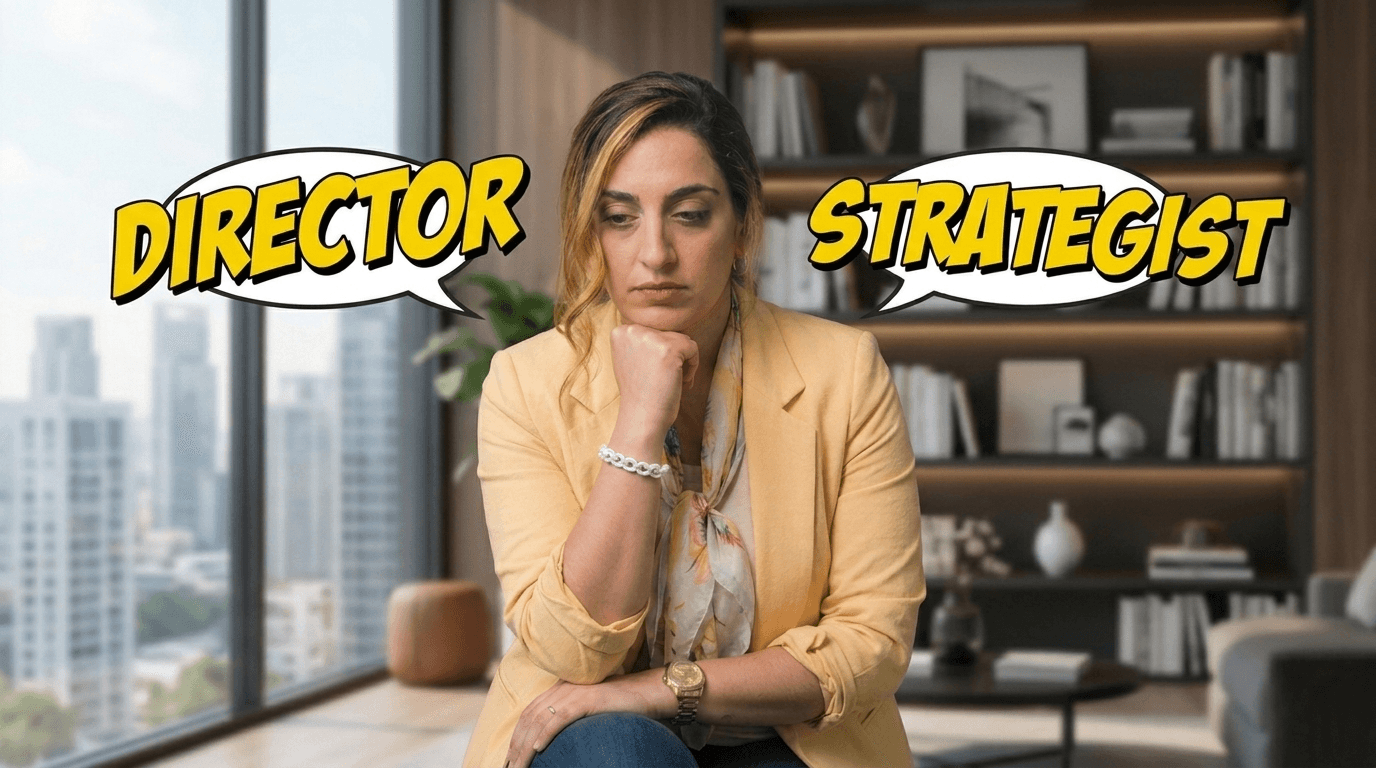
Creative strategy and creative direction are two of those terms that get thrown around in meetings until everyone starts nodding and nobody is entirely sure what anyone means. I've seen this, A LOT!
They are closely connected.
They also have very different jobs.
Creative strategy determines what the creative work needs to accomplish, who it needs to reach and why the idea should matter.
Creative direction determines how that strategy becomes an idea, an experience and a piece of creative work people can actually see, hear or interact with.
One creates the strategic foundation.
The other turns that foundation into creative direction.
And when they work well together, something rather lovely happens.
The business objective, the audience insight and the creative idea start pulling in the same direction.
“The easiest way I explain it is this: strategy gives the creative work a reason to exist. Creative direction gives it a personality.”
Riel Bo
That distinction becomes especially important as brands produce more content, more campaigns and more experiences across more channels.
Without strategy, creative work can become very pretty wandering.
Without creative direction, strategy can become a very impressive document nobody remembers.

What Is Creative Strategy?
Creative strategy is the thinking that sits behind the creative work.
It defines the problem, the opportunity, the audience, the message and the direction the creative work should take.
A creative strategist might ask:
Who are we trying to reach?
What do they care about?
What problem are we solving?
What does the business need to accomplish?
What does the audience currently believe?
What should they believe instead?
What makes this brand different?
What idea could connect all of that?
The answers create the strategic foundation for the creative work.
Imagine a company selling project management software.
The business wants more small businesses to sign up.
The obvious strategy might be:
Increase awareness among small business owners.
That is a goal.
It isn't much of a creative strategy yet.
A creative strategist might discover something more interesting.
Small business owners don't necessarily think they need another software platform. They think they need fewer things to manage.
That changes the conversation.
The strategic opportunity becomes:
Position the product as a way to get work out of your head and into one organized place.
Now there is something for the creative team to work with.
The strategy has created a direction.
What Is Creative Direction?
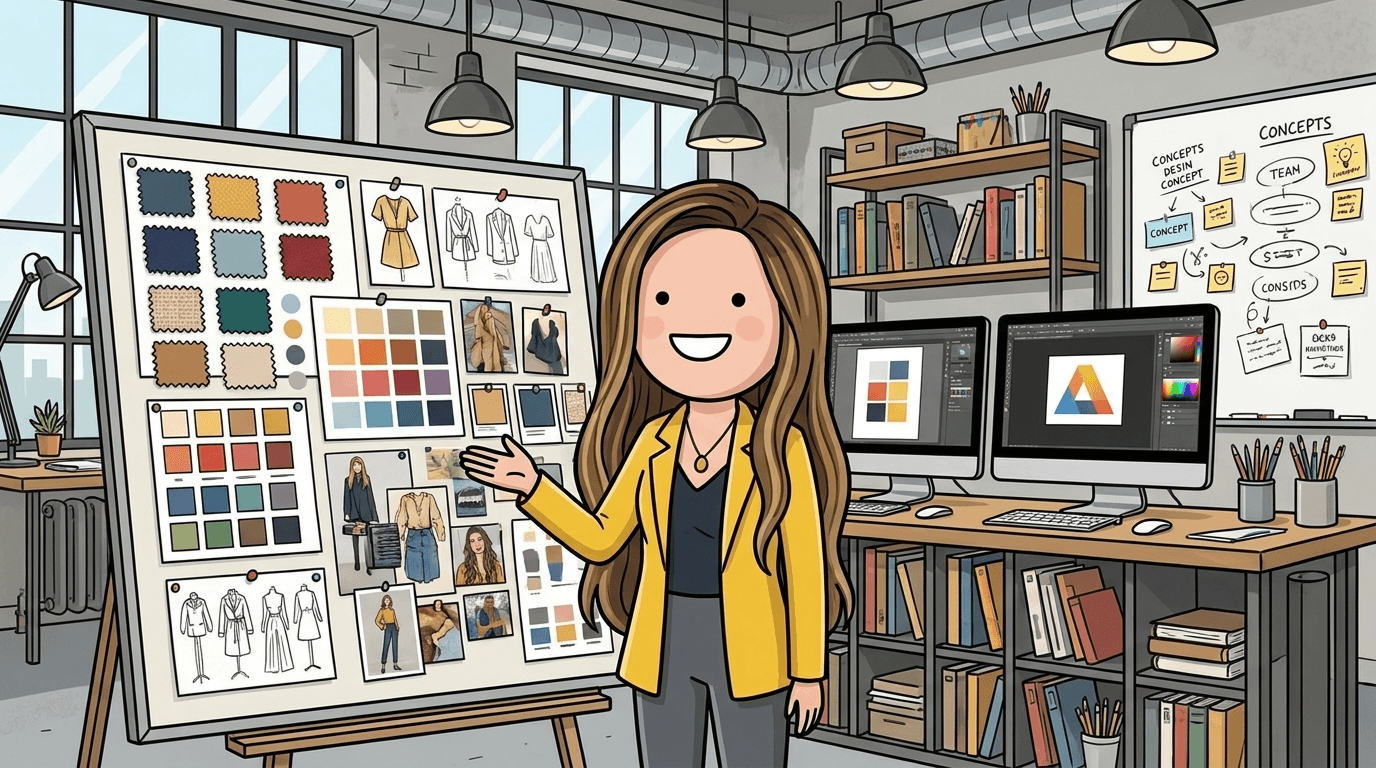
Creative direction takes the strategic thinking and turns it into creative expression.
The creative director asks:
What should this idea look like?
What should it sound like?
What should people feel?
What is the creative concept?
What is the visual language?
What is the tone?
How does the idea work across different channels?
What should the audience remember?
Using our project management example, the creative director might develop an idea around getting work out of your head.
Suddenly you have a creative territory.
You could show the chaos inside a business owner's head.
You could create a campaign around mental clutter.
You could use visual systems that transform scattered thoughts into organized plans.
You could develop a playful brand voice around the things business owners carry around in their brains all day.
Now the strategy has become something people can experience.
That is creative direction.
“Creative direction is where strategy gets a pulse. You take the thinking and give it a form people can recognize, remember and hopefully enjoy.”
Riel Bo, Creative Director
Creative Strategy vs. Creative Direction
The simplest way to understand the difference is to look at the questions each one answers.
Creative Strategy asks:
Why are we doing this?
Who are we trying to reach?
What problem are we solving?
What should people believe?
What should the creative work accomplish?
Creative Direction asks:
What is the idea?
What should it look like?
What should it sound like?
What should people feel?
How does the idea come to life?
The two roles overlap.
They also rely on each other.
A strong creative director understands strategy.
A strong creative strategist understands creative expression.
The difference is where each role places its greatest focus.
1. Creative Strategy Starts With the Business Problem
Good creative work starts with context.
A company might say:
“We need a new website.”
That sounds like a creative project.
It might actually be a business problem wearing a website costume.
Maybe the sales team is struggling because prospects don't understand the offering.
Maybe the brand has grown and the website no longer reflects the business.
Maybe the company has entered a new market.
Maybe customers can't figure out what the company actually does.
The strategist digs into the problem.
What is happening?
Why is it happening?
Who is affected?
What needs to change?
What would success look like?
The website may eventually be part of the answer.
It just shouldn't automatically become the answer before anyone understands the question.
2. Creative Strategy Defines the Audience
Define your ideal customer profile (ICP).
Knowing the audience means more than writing:
Target audience: women aged 25 to 45.
That is demographic information.
It doesn't necessarily tell you anything interesting.
A useful creative strategy tries to understand how people think.
What are they trying to accomplish?
What frustrates them?
What do they believe?
What are they afraid of?
What do they want to become?
What language do they use?
What would make them stop scrolling?
What would make them trust a brand?
What would make them tell someone else about it?
This is where research becomes useful.
The audience isn't a little demographic circle sitting inside a PowerPoint.
They are people.
They have jobs.
Bad days.
Opinions.
Group chats.
Subscriptions they forgot to cancel.
And approximately 400 things competing for their attention.
Creative strategy has to account for the human being on the other end of the message.
3. Creative Strategy Finds the Opportunity
A strategy should uncover something worth saying.
This could be a customer insight.
A market gap.
A cultural tension.
A positioning opportunity.
A misunderstood product benefit.
A behavior competitors haven't noticed.
This is often where the interesting work begins.
Imagine a company selling premium home organization products.
The obvious message might be:
Beautiful storage for your home.
Fine.
There are approximately 14 million brands saying some version of that.
A strategist might discover that the real customer motivation is different.
People don't actually dream about owning another storage basket.
They dream about walking into their house and feeling like they have their life together.
That is much more interesting.
Now the creative team has an emotional territory.
The product becomes part of a larger story about control, calm and everyday life.
The strategy found the opportunity.
Creative direction can now do something with it.
4. Creative Strategy Creates the Foundation
A creative strategy can include:
Brand positioning
Audience insights
Business objectives
Creative objectives
Key messages
Customer motivations
Competitive context
Brand personality
Campaign territory
Creative principles
Content direction
Success measures
The exact framework changes from project to project.
The goal stays the same:
Give the creative team enough clarity to make intelligent decisions.
A strategy shouldn't become a 60-page document that requires its own table of contents and a small research assistant.
It should make the important things clearer.
5. Creative Direction Turns the Strategy Into an Idea
Once the strategic foundation exists, creative direction starts asking what can be made from it.
This is where concepts appear.
The creative director might explore:
Campaign ideas
Visual systems
Taglines
Brand expressions
Photography styles
Typography
Motion
Illustration
Video
Interactive experiences
Social content
Editorial concepts
The strategist might say:
Customers want to feel more in control.
The creative director might turn that into:
Take Back Your Day.
Now you have a creative thought.
That thought can become a campaign.
It can influence the photography.
It can shape the website.
It can guide social content.
It can influence the product launch.
A strategy creates the territory.
A creative idea gives people somewhere to stand.
6. Creative Direction Creates the Experience
An idea isn't finished when someone writes it on a presentation slide.
It has to work in the real world.
A creative director thinks about how the idea behaves across different experiences.
What happens on the website?
What happens in an advertisement?
What happens on Instagram?
What happens in a video?
What happens when someone receives an email?
What happens when a salesperson presents the brand?
What happens six months later?
This is why creative direction goes beyond visual design.
It creates a system for expressing an idea.
The strongest creative direction makes individual pieces feel connected even when they appear in completely different places.
7. Strategy and Direction Need Each Other
Here's where things can get messy.
A strategist can develop an excellent insight.
The insight may be completely correct.
It may also be painfully boring.
A creative director can develop a brilliant idea.
The idea may be beautiful, funny and memorable.
It may also have absolutely nothing to do with the business problem.
Neither situation is particularly useful.
Great creative work happens when the two disciplines challenge each other.
Strategy asks:
Does this idea matter?
Creative direction asks:
Can we make people care about it?
Strategy asks:
Does this solve the problem?
Creative direction asks:
Can we make the solution interesting?
Strategy creates relevance.
Creative direction creates resonance.
That is a pretty powerful combination.
8. Where Does Brand Strategy Fit?
Brand strategy adds another layer.
A brand strategy might define:
Positioning
Purpose
Values
Audience
Personality
Differentiation
Market position
Brand promise
Creative strategy then figures out how those ideas can inform a specific communication challenge.
Creative direction turns them into expression.
Think of it as a series of connected layers.
Brand strategy
Who are we?
↓
Creative strategy
What do we need to say and why?
↓
Creative direction
What is the idea and how should it come to life?
↓
Creative production
How do we actually make it?
Each layer influences the next.
A weak foundation creates problems further down the line.
A strong foundation makes creative decisions considerably easier.
9. Who Should Own the Creative Strategy?
This depends on the organization.
A creative strategist may own it.
A creative director may develop it.
A brand strategist may contribute to it.
A marketing director may establish the business objectives.
Sometimes one person handles several of these roles.
That happens frequently in smaller organizations.
The important thing is making sure someone owns the thinking.
Because when nobody owns the strategy, everyone starts filling in the blanks.
And that is how you end up with a campaign that was apparently designed for everyone, says seven different things and somehow has a picture of a smiling woman holding a laptop.
Nobody knows why she is there.
She has seen things.
10. What Happens When Strategy Comes Too Late?
This is a common problem.
A team starts designing before the strategic questions have been answered.
The logo gets redesigned.
The homepage gets mocked up.
Someone chooses photography.
The copy starts getting written.
Then someone asks:
Wait. Who is this actually for?
Now everyone has to go backward.
Creative work becomes more expensive because the foundation wasn't established first.
A little strategy early in the process can save a remarkable amount of creative production later.
“The most expensive creative mistake I've seen is starting production before everyone agrees on what they're trying to accomplish.”
Riel Bo, Creative Director
That is why creative strategy should happen early.
Before the mood boards.
Before the design rounds.
Before somebody has spent two days looking for the perfect stock photograph of a diverse team laughing at a laptop.
11. What Happens When Creative Direction Comes Too Late?
The opposite problem exists too.
A business develops a detailed strategy and assumes the creative team will simply make it look good.
Now the strategy becomes rigid.
There is no room for ideas.
The creative team becomes an execution department.
That leaves a lot of potential on the table.
Creative directors should be involved early enough to influence the idea rather than simply decorate it.
The strongest creative thinking often changes the strategy itself.
A creative idea can reveal a new audience insight.
A campaign concept can uncover a stronger positioning opportunity.
A visual direction can change how a product is perceived.
Creative direction and strategy should have a conversation.
They shouldn't pass each other in the hallway.
12. Creative Strategy and Creative Direction in the Age of AI
AI makes the relationship between strategy and creative direction even more interesting.
Creative teams can now generate enormous amounts of creative material very quickly.
You can produce dozens of headlines.
Generate visual concepts.
Explore different brand personalities.
Create campaign variations.
Develop content ideas.
Build prototypes.
The bottleneck increasingly becomes judgment.
Which idea is strategically useful?
Which idea is distinctive?
Which idea actually belongs to the brand?
Which idea has emotional weight?
Which idea is worth developing?
AI can generate possibilities.
Strategy helps determine which possibilities matter.
Creative direction determines how those possibilities become compelling creative work.
“The more creative options technology gives us, the more important it becomes to know what we're looking for.”
Riel Bo, Creative Director
That is one of the biggest shifts happening in creative work right now.
The valuable skill isn't simply making more.
It is knowing what deserves to exist.


So, Which One Do You Need?
This is where businesses often get stuck.
Do you need a creative strategist?
A creative director?
A brand strategist?
A designer?
An agency?
An entire creative department?
The answer depends on the problem.
If you don't know what you should say, you probably have a strategy problem.
If you know what you need to say but don't know how to make it compelling, you probably have a creative direction problem.
If your brand feels inconsistent, you may have a brand strategy or creative direction problem.
If you have a strong idea but can't produce it efficiently, you may have a creative production problem.
Sometimes you have all four.
That is when things get particularly interesting.
The Modern Creative Leader Often Does Both
The boundaries between creative strategy and creative direction have become more fluid.
A modern creative leader may be expected to understand:
Business strategy
Brand strategy
Customer psychology
Creative strategy
Art direction
Content
Technology
AI
Marketing
Production
Team leadership
That doesn't mean one person has to personally perform every task.
It means they need to understand how the pieces connect.
A creative director who understands strategy can make better creative decisions.
A strategist who understands creative direction can build more useful strategies.
And a creative leader who understands both can move much faster.
What Makes a Strong Creative Strategy?
A strong creative strategy should answer several basic questions.
What are we trying to accomplish?
Who are we trying to reach?
What do we know about them?
What problem or opportunity are we addressing?
What should people think, feel or do?
What should the brand own?
What is the central idea?
How will the idea translate into creative work?
How will we know if it worked?
If the team can answer those questions, the creative process becomes much clearer.
If nobody can answer them, perhaps everyone should resist opening Figma for another 20 minutes.
What Makes Strong Creative Direction?
Strong creative direction gives the strategy a recognizable personality.
It creates:
A clear creative concept
A distinctive visual language
A consistent voice
A strong emotional response
A coherent brand experience
A system for making creative decisions
A clear standard for quality
It also creates momentum.
People know what they are making.
They know why they are making it.
They know what good looks like.
That makes creative teams faster.
It also makes meetings considerably less painful.
The Relationship in One Sentence
If you remember nothing else, remember this:
Creative strategy decides what the work needs to accomplish. Creative direction decides how the work should make that happen.
Strategy gives the work purpose.
Creative direction gives it personality.
Strategy creates clarity.
Creative direction creates expression.
Strategy asks:
Why?
Creative direction asks:
How?
And the really good work happens when the answers agree.
“I don't think strategy and creativity should live in separate rooms. The best ideas usually happen when someone brings the business problem into the creative conversation early enough for the idea to change it.”
Riel Bo, Creative Director
The modern creative leader needs both sides of that conversation.
You need to understand the problem.
You need to find the opportunity.
You need to know what matters.
Then you need to turn that thinking into something people can actually see, remember and care about.
That is the difference between having a strategy and having a creative idea.
And that is where creative direction earns its keep.
Frequently Asked Questions
What is the difference between creative strategy and creative direction?
Creative strategy defines the business problem, audience, opportunity, message and objectives behind creative work. Creative direction turns that strategic foundation into creative concepts, visual direction, messaging and experiences.
Is a creative director a strategist?
A creative director can be highly strategic and many creative directors develop creative strategy themselves. The roles have different primary areas of focus. Creative strategy generally concentrates on the thinking behind the work while creative direction focuses on turning that thinking into creative expression.
What does a creative strategist do?
A creative strategist researches audiences, identifies insights, defines creative opportunities and develops strategic direction for campaigns, brands and other creative projects. They help determine what the brand should communicate and why.
What does a creative director do?
A creative director develops the creative vision and oversees how that vision comes to life. They may lead creative teams, develop concepts, direct visual and verbal expression, review work, present ideas and maintain creative quality.
Can one person be both a creative strategist and creative director?
Yes. In smaller companies, agencies and independent creative practices, one person may handle both responsibilities. The important distinction is understanding which questions are strategic and which questions are creative.
What comes first, creative strategy or creative direction?
Creative strategy generally establishes the foundation for creative direction. However, the two should influence each other throughout the process. A strong creative idea can reveal a new strategic opportunity and change the direction of the project.
Why is creative strategy important?
Creative strategy helps ensure that creative work supports a meaningful objective. It gives teams a clear understanding of the audience, problem, opportunity and intended outcome before significant production begins.
Does AI replace creative strategy or creative direction?
AI can support research, ideation, content development and creative production. Strategy and creative direction still require human judgment, context, brand understanding and decision-making. As AI increases the number of creative possibilities available, the ability to evaluate those possibilities becomes increasingly valuable.
The Short Version
Creative strategy asks:
What are we trying to accomplish?
Who are we trying to reach?
Why should they care?
Creative direction asks:
What is the idea?
How should it look?
How should it sound?
How should it make people feel?
Strategy gives creative work a reason.
Creative direction gives it a voice.
And when both are working properly, you get something better than a clever campaign or a beautiful brand.
You get creative work that has somewhere to go.
That is usually a good place to start.

Join me for a coffee...
More to Discover


Creative Director vs. Creative Strategist
Understand the difference between creative strategy and creative direction, how the two roles work together and why great creative work needs both.
Insights
Creative strategy and creative direction are two of those terms that get thrown around in meetings until everyone starts nodding and nobody is entirely sure what anyone means. I've seen this, A LOT!
They are closely connected.
They also have very different jobs.
Creative strategy determines what the creative work needs to accomplish, who it needs to reach and why the idea should matter.
Creative direction determines how that strategy becomes an idea, an experience and a piece of creative work people can actually see, hear or interact with.
One creates the strategic foundation.
The other turns that foundation into creative direction.
And when they work well together, something rather lovely happens.
The business objective, the audience insight and the creative idea start pulling in the same direction.
“The easiest way I explain it is this: strategy gives the creative work a reason to exist. Creative direction gives it a personality.”
Riel Bo
That distinction becomes especially important as brands produce more content, more campaigns and more experiences across more channels.
Without strategy, creative work can become very pretty wandering.
Without creative direction, strategy can become a very impressive document nobody remembers.
What Is Creative Strategy?
Creative strategy is the thinking that sits behind the creative work.
It defines the problem, the opportunity, the audience, the message and the direction the creative work should take.
A creative strategist might ask:
Who are we trying to reach?
What do they care about?
What problem are we solving?
What does the business need to accomplish?
What does the audience currently believe?
What should they believe instead?
What makes this brand different?
What idea could connect all of that?
The answers create the strategic foundation for the creative work.
Imagine a company selling project management software.
The business wants more small businesses to sign up.
The obvious strategy might be:
Increase awareness among small business owners.
That is a goal.
It isn't much of a creative strategy yet.
A creative strategist might discover something more interesting.
Small business owners don't necessarily think they need another software platform. They think they need fewer things to manage.
That changes the conversation.
The strategic opportunity becomes:
Position the product as a way to get work out of your head and into one organized place.
Now there is something for the creative team to work with.
The strategy has created a direction.
What Is Creative Direction?
Creative direction takes the strategic thinking and turns it into creative expression.
The creative director asks:
What should this idea look like?
What should it sound like?
What should people feel?
What is the creative concept?
What is the visual language?
What is the tone?
How does the idea work across different channels?
What should the audience remember?
Using our project management example, the creative director might develop an idea around getting work out of your head.
Suddenly you have a creative territory.
You could show the chaos inside a business owner's head.
You could create a campaign around mental clutter.
You could use visual systems that transform scattered thoughts into organized plans.
You could develop a playful brand voice around the things business owners carry around in their brains all day.
Now the strategy has become something people can experience.
That is creative direction.
“Creative direction is where strategy gets a pulse. You take the thinking and give it a form people can recognize, remember and hopefully enjoy.”
Riel Bo, Creative Director
Creative Strategy vs. Creative Direction
The simplest way to understand the difference is to look at the questions each one answers.
Creative Strategy asks:
Why are we doing this?
Who are we trying to reach?
What problem are we solving?
What should people believe?
What should the creative work accomplish?
Creative Direction asks:
What is the idea?
What should it look like?
What should it sound like?
What should people feel?
How does the idea come to life?
The two roles overlap.
They also rely on each other.
A strong creative director understands strategy.
A strong creative strategist understands creative expression.
The difference is where each role places its greatest focus.
1. Creative Strategy Starts With the Business Problem
Good creative work starts with context.
A company might say:
“We need a new website.”
That sounds like a creative project.
It might actually be a business problem wearing a website costume.
Maybe the sales team is struggling because prospects don't understand the offering.
Maybe the brand has grown and the website no longer reflects the business.
Maybe the company has entered a new market.
Maybe customers can't figure out what the company actually does.
The strategist digs into the problem.
What is happening?
Why is it happening?
Who is affected?
What needs to change?
What would success look like?
The website may eventually be part of the answer.
It just shouldn't automatically become the answer before anyone understands the question.
2. Creative Strategy Defines the Audience
Define your ideal customer profile (ICP).
Knowing the audience means more than writing:
Target audience: women aged 25 to 45.
That is demographic information.
It doesn't necessarily tell you anything interesting.
A useful creative strategy tries to understand how people think.
What are they trying to accomplish?
What frustrates them?
What do they believe?
What are they afraid of?
What do they want to become?
What language do they use?
What would make them stop scrolling?
What would make them trust a brand?
What would make them tell someone else about it?
This is where research becomes useful.
The audience isn't a little demographic circle sitting inside a PowerPoint.
They are people.
They have jobs.
Bad days.
Opinions.
Group chats.
Subscriptions they forgot to cancel.
And approximately 400 things competing for their attention.
Creative strategy has to account for the human being on the other end of the message.
3. Creative Strategy Finds the Opportunity
A strategy should uncover something worth saying.
This could be a customer insight.
A market gap.
A cultural tension.
A positioning opportunity.
A misunderstood product benefit.
A behavior competitors haven't noticed.
This is often where the interesting work begins.
Imagine a company selling premium home organization products.
The obvious message might be:
Beautiful storage for your home.
Fine.
There are approximately 14 million brands saying some version of that.
A strategist might discover that the real customer motivation is different.
People don't actually dream about owning another storage basket.
They dream about walking into their house and feeling like they have their life together.
That is much more interesting.
Now the creative team has an emotional territory.
The product becomes part of a larger story about control, calm and everyday life.
The strategy found the opportunity.
Creative direction can now do something with it.
4. Creative Strategy Creates the Foundation
A creative strategy can include:
Brand positioning
Audience insights
Business objectives
Creative objectives
Key messages
Customer motivations
Competitive context
Brand personality
Campaign territory
Creative principles
Content direction
Success measures
The exact framework changes from project to project.
The goal stays the same:
Give the creative team enough clarity to make intelligent decisions.
A strategy shouldn't become a 60-page document that requires its own table of contents and a small research assistant.
It should make the important things clearer.
5. Creative Direction Turns the Strategy Into an Idea
Once the strategic foundation exists, creative direction starts asking what can be made from it.
This is where concepts appear.
The creative director might explore:
Campaign ideas
Visual systems
Taglines
Brand expressions
Photography styles
Typography
Motion
Illustration
Video
Interactive experiences
Social content
Editorial concepts
The strategist might say:
Customers want to feel more in control.
The creative director might turn that into:
Take Back Your Day.
Now you have a creative thought.
That thought can become a campaign.
It can influence the photography.
It can shape the website.
It can guide social content.
It can influence the product launch.
A strategy creates the territory.
A creative idea gives people somewhere to stand.
6. Creative Direction Creates the Experience
An idea isn't finished when someone writes it on a presentation slide.
It has to work in the real world.
A creative director thinks about how the idea behaves across different experiences.
What happens on the website?
What happens in an advertisement?
What happens on Instagram?
What happens in a video?
What happens when someone receives an email?
What happens when a salesperson presents the brand?
What happens six months later?
This is why creative direction goes beyond visual design.
It creates a system for expressing an idea.
The strongest creative direction makes individual pieces feel connected even when they appear in completely different places.
7. Strategy and Direction Need Each Other
Here's where things can get messy.
A strategist can develop an excellent insight.
The insight may be completely correct.
It may also be painfully boring.
A creative director can develop a brilliant idea.
The idea may be beautiful, funny and memorable.
It may also have absolutely nothing to do with the business problem.
Neither situation is particularly useful.
Great creative work happens when the two disciplines challenge each other.
Strategy asks:
Does this idea matter?
Creative direction asks:
Can we make people care about it?
Strategy asks:
Does this solve the problem?
Creative direction asks:
Can we make the solution interesting?
Strategy creates relevance.
Creative direction creates resonance.
That is a pretty powerful combination.
8. Where Does Brand Strategy Fit?
Brand strategy adds another layer.
A brand strategy might define:
Positioning
Purpose
Values
Audience
Personality
Differentiation
Market position
Brand promise
Creative strategy then figures out how those ideas can inform a specific communication challenge.
Creative direction turns them into expression.
Think of it as a series of connected layers.
Brand strategy
Who are we?
↓
Creative strategy
What do we need to say and why?
↓
Creative direction
What is the idea and how should it come to life?
↓
Creative production
How do we actually make it?
Each layer influences the next.
A weak foundation creates problems further down the line.
A strong foundation makes creative decisions considerably easier.
9. Who Should Own the Creative Strategy?
This depends on the organization.
A creative strategist may own it.
A creative director may develop it.
A brand strategist may contribute to it.
A marketing director may establish the business objectives.
Sometimes one person handles several of these roles.
That happens frequently in smaller organizations.
The important thing is making sure someone owns the thinking.
Because when nobody owns the strategy, everyone starts filling in the blanks.
And that is how you end up with a campaign that was apparently designed for everyone, says seven different things and somehow has a picture of a smiling woman holding a laptop.
Nobody knows why she is there.
She has seen things.
10. What Happens When Strategy Comes Too Late?
This is a common problem.
A team starts designing before the strategic questions have been answered.
The logo gets redesigned.
The homepage gets mocked up.
Someone chooses photography.
The copy starts getting written.
Then someone asks:
Wait. Who is this actually for?
Now everyone has to go backward.
Creative work becomes more expensive because the foundation wasn't established first.
A little strategy early in the process can save a remarkable amount of creative production later.
“The most expensive creative mistake I've seen is starting production before everyone agrees on what they're trying to accomplish.”
Riel Bo, Creative Director
That is why creative strategy should happen early.
Before the mood boards.
Before the design rounds.
Before somebody has spent two days looking for the perfect stock photograph of a diverse team laughing at a laptop.
11. What Happens When Creative Direction Comes Too Late?
The opposite problem exists too.
A business develops a detailed strategy and assumes the creative team will simply make it look good.
Now the strategy becomes rigid.
There is no room for ideas.
The creative team becomes an execution department.
That leaves a lot of potential on the table.
Creative directors should be involved early enough to influence the idea rather than simply decorate it.
The strongest creative thinking often changes the strategy itself.
A creative idea can reveal a new audience insight.
A campaign concept can uncover a stronger positioning opportunity.
A visual direction can change how a product is perceived.
Creative direction and strategy should have a conversation.
They shouldn't pass each other in the hallway.
12. Creative Strategy and Creative Direction in the Age of AI
AI makes the relationship between strategy and creative direction even more interesting.
Creative teams can now generate enormous amounts of creative material very quickly.
You can produce dozens of headlines.
Generate visual concepts.
Explore different brand personalities.
Create campaign variations.
Develop content ideas.
Build prototypes.
The bottleneck increasingly becomes judgment.
Which idea is strategically useful?
Which idea is distinctive?
Which idea actually belongs to the brand?
Which idea has emotional weight?
Which idea is worth developing?
AI can generate possibilities.
Strategy helps determine which possibilities matter.
Creative direction determines how those possibilities become compelling creative work.
“The more creative options technology gives us, the more important it becomes to know what we're looking for.”
Riel Bo, Creative Director
That is one of the biggest shifts happening in creative work right now.
The valuable skill isn't simply making more.
It is knowing what deserves to exist.
So, Which One Do You Need?
This is where businesses often get stuck.
Do you need a creative strategist?
A creative director?
A brand strategist?
A designer?
An agency?
An entire creative department?
The answer depends on the problem.
If you don't know what you should say, you probably have a strategy problem.
If you know what you need to say but don't know how to make it compelling, you probably have a creative direction problem.
If your brand feels inconsistent, you may have a brand strategy or creative direction problem.
If you have a strong idea but can't produce it efficiently, you may have a creative production problem.
Sometimes you have all four.
That is when things get particularly interesting.
The Modern Creative Leader Often Does Both
The boundaries between creative strategy and creative direction have become more fluid.
A modern creative leader may be expected to understand:
Business strategy
Brand strategy
Customer psychology
Creative strategy
Art direction
Content
Technology
AI
Marketing
Production
Team leadership
That doesn't mean one person has to personally perform every task.
It means they need to understand how the pieces connect.
A creative director who understands strategy can make better creative decisions.
A strategist who understands creative direction can build more useful strategies.
And a creative leader who understands both can move much faster.
What Makes a Strong Creative Strategy?
A strong creative strategy should answer several basic questions.
What are we trying to accomplish?
Who are we trying to reach?
What do we know about them?
What problem or opportunity are we addressing?
What should people think, feel or do?
What should the brand own?
What is the central idea?
How will the idea translate into creative work?
How will we know if it worked?
If the team can answer those questions, the creative process becomes much clearer.
If nobody can answer them, perhaps everyone should resist opening Figma for another 20 minutes.
What Makes Strong Creative Direction?
Strong creative direction gives the strategy a recognizable personality.
It creates:
A clear creative concept
A distinctive visual language
A consistent voice
A strong emotional response
A coherent brand experience
A system for making creative decisions
A clear standard for quality
It also creates momentum.
People know what they are making.
They know why they are making it.
They know what good looks like.
That makes creative teams faster.
It also makes meetings considerably less painful.
The Relationship in One Sentence
If you remember nothing else, remember this:
Creative strategy decides what the work needs to accomplish. Creative direction decides how the work should make that happen.
Strategy gives the work purpose.
Creative direction gives it personality.
Strategy creates clarity.
Creative direction creates expression.
Strategy asks:
Why?
Creative direction asks:
How?
And the really good work happens when the answers agree.
“I don't think strategy and creativity should live in separate rooms. The best ideas usually happen when someone brings the business problem into the creative conversation early enough for the idea to change it.”
Riel Bo, Creative Director
The modern creative leader needs both sides of that conversation.
You need to understand the problem.
You need to find the opportunity.
You need to know what matters.
Then you need to turn that thinking into something people can actually see, remember and care about.
That is the difference between having a strategy and having a creative idea.
And that is where creative direction earns its keep.
Frequently Asked Questions
What is the difference between creative strategy and creative direction?
Creative strategy defines the business problem, audience, opportunity, message and objectives behind creative work. Creative direction turns that strategic foundation into creative concepts, visual direction, messaging and experiences.
Is a creative director a strategist?
A creative director can be highly strategic and many creative directors develop creative strategy themselves. The roles have different primary areas of focus. Creative strategy generally concentrates on the thinking behind the work while creative direction focuses on turning that thinking into creative expression.
What does a creative strategist do?
A creative strategist researches audiences, identifies insights, defines creative opportunities and develops strategic direction for campaigns, brands and other creative projects. They help determine what the brand should communicate and why.
What does a creative director do?
A creative director develops the creative vision and oversees how that vision comes to life. They may lead creative teams, develop concepts, direct visual and verbal expression, review work, present ideas and maintain creative quality.
Can one person be both a creative strategist and creative director?
Yes. In smaller companies, agencies and independent creative practices, one person may handle both responsibilities. The important distinction is understanding which questions are strategic and which questions are creative.
What comes first, creative strategy or creative direction?
Creative strategy generally establishes the foundation for creative direction. However, the two should influence each other throughout the process. A strong creative idea can reveal a new strategic opportunity and change the direction of the project.
Why is creative strategy important?
Creative strategy helps ensure that creative work supports a meaningful objective. It gives teams a clear understanding of the audience, problem, opportunity and intended outcome before significant production begins.
Does AI replace creative strategy or creative direction?
AI can support research, ideation, content development and creative production. Strategy and creative direction still require human judgment, context, brand understanding and decision-making. As AI increases the number of creative possibilities available, the ability to evaluate those possibilities becomes increasingly valuable.
The Short Version
Creative strategy asks:
What are we trying to accomplish?
Who are we trying to reach?
Why should they care?
Creative direction asks:
What is the idea?
How should it look?
How should it sound?
How should it make people feel?
Strategy gives creative work a reason.
Creative direction gives it a voice.
And when both are working properly, you get something better than a clever campaign or a beautiful brand.
You get creative work that has somewhere to go.
That is usually a good place to start.
Join me for a coffee...
More to Discover
Creative Director vs. Creative Strategist
Understand the difference between creative strategy and creative direction, how the two roles work together and why great creative work needs both.
Insights
Creative strategy and creative direction are two of those terms that get thrown around in meetings until everyone starts nodding and nobody is entirely sure what anyone means. I've seen this, A LOT!
They are closely connected.
They also have very different jobs.
Creative strategy determines what the creative work needs to accomplish, who it needs to reach and why the idea should matter.
Creative direction determines how that strategy becomes an idea, an experience and a piece of creative work people can actually see, hear or interact with.
One creates the strategic foundation.
The other turns that foundation into creative direction.
And when they work well together, something rather lovely happens.
The business objective, the audience insight and the creative idea start pulling in the same direction.
“The easiest way I explain it is this: strategy gives the creative work a reason to exist. Creative direction gives it a personality.”
Riel Bo
That distinction becomes especially important as brands produce more content, more campaigns and more experiences across more channels.
Without strategy, creative work can become very pretty wandering.
Without creative direction, strategy can become a very impressive document nobody remembers.
What Is Creative Strategy?
Creative strategy is the thinking that sits behind the creative work.
It defines the problem, the opportunity, the audience, the message and the direction the creative work should take.
A creative strategist might ask:
Who are we trying to reach?
What do they care about?
What problem are we solving?
What does the business need to accomplish?
What does the audience currently believe?
What should they believe instead?
What makes this brand different?
What idea could connect all of that?
The answers create the strategic foundation for the creative work.
Imagine a company selling project management software.
The business wants more small businesses to sign up.
The obvious strategy might be:
Increase awareness among small business owners.
That is a goal.
It isn't much of a creative strategy yet.
A creative strategist might discover something more interesting.
Small business owners don't necessarily think they need another software platform. They think they need fewer things to manage.
That changes the conversation.
The strategic opportunity becomes:
Position the product as a way to get work out of your head and into one organized place.
Now there is something for the creative team to work with.
The strategy has created a direction.
What Is Creative Direction?
Creative direction takes the strategic thinking and turns it into creative expression.
The creative director asks:
What should this idea look like?
What should it sound like?
What should people feel?
What is the creative concept?
What is the visual language?
What is the tone?
How does the idea work across different channels?
What should the audience remember?
Using our project management example, the creative director might develop an idea around getting work out of your head.
Suddenly you have a creative territory.
You could show the chaos inside a business owner's head.
You could create a campaign around mental clutter.
You could use visual systems that transform scattered thoughts into organized plans.
You could develop a playful brand voice around the things business owners carry around in their brains all day.
Now the strategy has become something people can experience.
That is creative direction.
“Creative direction is where strategy gets a pulse. You take the thinking and give it a form people can recognize, remember and hopefully enjoy.”
Riel Bo, Creative Director
Creative Strategy vs. Creative Direction
The simplest way to understand the difference is to look at the questions each one answers.
Creative Strategy asks:
Why are we doing this?
Who are we trying to reach?
What problem are we solving?
What should people believe?
What should the creative work accomplish?
Creative Direction asks:
What is the idea?
What should it look like?
What should it sound like?
What should people feel?
How does the idea come to life?
The two roles overlap.
They also rely on each other.
A strong creative director understands strategy.
A strong creative strategist understands creative expression.
The difference is where each role places its greatest focus.
1. Creative Strategy Starts With the Business Problem
Good creative work starts with context.
A company might say:
“We need a new website.”
That sounds like a creative project.
It might actually be a business problem wearing a website costume.
Maybe the sales team is struggling because prospects don't understand the offering.
Maybe the brand has grown and the website no longer reflects the business.
Maybe the company has entered a new market.
Maybe customers can't figure out what the company actually does.
The strategist digs into the problem.
What is happening?
Why is it happening?
Who is affected?
What needs to change?
What would success look like?
The website may eventually be part of the answer.
It just shouldn't automatically become the answer before anyone understands the question.
2. Creative Strategy Defines the Audience
Define your ideal customer profile (ICP).
Knowing the audience means more than writing:
Target audience: women aged 25 to 45.
That is demographic information.
It doesn't necessarily tell you anything interesting.
A useful creative strategy tries to understand how people think.
What are they trying to accomplish?
What frustrates them?
What do they believe?
What are they afraid of?
What do they want to become?
What language do they use?
What would make them stop scrolling?
What would make them trust a brand?
What would make them tell someone else about it?
This is where research becomes useful.
The audience isn't a little demographic circle sitting inside a PowerPoint.
They are people.
They have jobs.
Bad days.
Opinions.
Group chats.
Subscriptions they forgot to cancel.
And approximately 400 things competing for their attention.
Creative strategy has to account for the human being on the other end of the message.
3. Creative Strategy Finds the Opportunity
A strategy should uncover something worth saying.
This could be a customer insight.
A market gap.
A cultural tension.
A positioning opportunity.
A misunderstood product benefit.
A behavior competitors haven't noticed.
This is often where the interesting work begins.
Imagine a company selling premium home organization products.
The obvious message might be:
Beautiful storage for your home.
Fine.
There are approximately 14 million brands saying some version of that.
A strategist might discover that the real customer motivation is different.
People don't actually dream about owning another storage basket.
They dream about walking into their house and feeling like they have their life together.
That is much more interesting.
Now the creative team has an emotional territory.
The product becomes part of a larger story about control, calm and everyday life.
The strategy found the opportunity.
Creative direction can now do something with it.
4. Creative Strategy Creates the Foundation
A creative strategy can include:
Brand positioning
Audience insights
Business objectives
Creative objectives
Key messages
Customer motivations
Competitive context
Brand personality
Campaign territory
Creative principles
Content direction
Success measures
The exact framework changes from project to project.
The goal stays the same:
Give the creative team enough clarity to make intelligent decisions.
A strategy shouldn't become a 60-page document that requires its own table of contents and a small research assistant.
It should make the important things clearer.
5. Creative Direction Turns the Strategy Into an Idea
Once the strategic foundation exists, creative direction starts asking what can be made from it.
This is where concepts appear.
The creative director might explore:
Campaign ideas
Visual systems
Taglines
Brand expressions
Photography styles
Typography
Motion
Illustration
Video
Interactive experiences
Social content
Editorial concepts
The strategist might say:
Customers want to feel more in control.
The creative director might turn that into:
Take Back Your Day.
Now you have a creative thought.
That thought can become a campaign.
It can influence the photography.
It can shape the website.
It can guide social content.
It can influence the product launch.
A strategy creates the territory.
A creative idea gives people somewhere to stand.
6. Creative Direction Creates the Experience
An idea isn't finished when someone writes it on a presentation slide.
It has to work in the real world.
A creative director thinks about how the idea behaves across different experiences.
What happens on the website?
What happens in an advertisement?
What happens on Instagram?
What happens in a video?
What happens when someone receives an email?
What happens when a salesperson presents the brand?
What happens six months later?
This is why creative direction goes beyond visual design.
It creates a system for expressing an idea.
The strongest creative direction makes individual pieces feel connected even when they appear in completely different places.
7. Strategy and Direction Need Each Other
Here's where things can get messy.
A strategist can develop an excellent insight.
The insight may be completely correct.
It may also be painfully boring.
A creative director can develop a brilliant idea.
The idea may be beautiful, funny and memorable.
It may also have absolutely nothing to do with the business problem.
Neither situation is particularly useful.
Great creative work happens when the two disciplines challenge each other.
Strategy asks:
Does this idea matter?
Creative direction asks:
Can we make people care about it?
Strategy asks:
Does this solve the problem?
Creative direction asks:
Can we make the solution interesting?
Strategy creates relevance.
Creative direction creates resonance.
That is a pretty powerful combination.
8. Where Does Brand Strategy Fit?
Brand strategy adds another layer.
A brand strategy might define:
Positioning
Purpose
Values
Audience
Personality
Differentiation
Market position
Brand promise
Creative strategy then figures out how those ideas can inform a specific communication challenge.
Creative direction turns them into expression.
Think of it as a series of connected layers.
Brand strategy
Who are we?
↓
Creative strategy
What do we need to say and why?
↓
Creative direction
What is the idea and how should it come to life?
↓
Creative production
How do we actually make it?
Each layer influences the next.
A weak foundation creates problems further down the line.
A strong foundation makes creative decisions considerably easier.
9. Who Should Own the Creative Strategy?
This depends on the organization.
A creative strategist may own it.
A creative director may develop it.
A brand strategist may contribute to it.
A marketing director may establish the business objectives.
Sometimes one person handles several of these roles.
That happens frequently in smaller organizations.
The important thing is making sure someone owns the thinking.
Because when nobody owns the strategy, everyone starts filling in the blanks.
And that is how you end up with a campaign that was apparently designed for everyone, says seven different things and somehow has a picture of a smiling woman holding a laptop.
Nobody knows why she is there.
She has seen things.
10. What Happens When Strategy Comes Too Late?
This is a common problem.
A team starts designing before the strategic questions have been answered.
The logo gets redesigned.
The homepage gets mocked up.
Someone chooses photography.
The copy starts getting written.
Then someone asks:
Wait. Who is this actually for?
Now everyone has to go backward.
Creative work becomes more expensive because the foundation wasn't established first.
A little strategy early in the process can save a remarkable amount of creative production later.
“The most expensive creative mistake I've seen is starting production before everyone agrees on what they're trying to accomplish.”
Riel Bo, Creative Director
That is why creative strategy should happen early.
Before the mood boards.
Before the design rounds.
Before somebody has spent two days looking for the perfect stock photograph of a diverse team laughing at a laptop.
11. What Happens When Creative Direction Comes Too Late?
The opposite problem exists too.
A business develops a detailed strategy and assumes the creative team will simply make it look good.
Now the strategy becomes rigid.
There is no room for ideas.
The creative team becomes an execution department.
That leaves a lot of potential on the table.
Creative directors should be involved early enough to influence the idea rather than simply decorate it.
The strongest creative thinking often changes the strategy itself.
A creative idea can reveal a new audience insight.
A campaign concept can uncover a stronger positioning opportunity.
A visual direction can change how a product is perceived.
Creative direction and strategy should have a conversation.
They shouldn't pass each other in the hallway.
12. Creative Strategy and Creative Direction in the Age of AI
AI makes the relationship between strategy and creative direction even more interesting.
Creative teams can now generate enormous amounts of creative material very quickly.
You can produce dozens of headlines.
Generate visual concepts.
Explore different brand personalities.
Create campaign variations.
Develop content ideas.
Build prototypes.
The bottleneck increasingly becomes judgment.
Which idea is strategically useful?
Which idea is distinctive?
Which idea actually belongs to the brand?
Which idea has emotional weight?
Which idea is worth developing?
AI can generate possibilities.
Strategy helps determine which possibilities matter.
Creative direction determines how those possibilities become compelling creative work.
“The more creative options technology gives us, the more important it becomes to know what we're looking for.”
Riel Bo, Creative Director
That is one of the biggest shifts happening in creative work right now.
The valuable skill isn't simply making more.
It is knowing what deserves to exist.
So, Which One Do You Need?
This is where businesses often get stuck.
Do you need a creative strategist?
A creative director?
A brand strategist?
A designer?
An agency?
An entire creative department?
The answer depends on the problem.
If you don't know what you should say, you probably have a strategy problem.
If you know what you need to say but don't know how to make it compelling, you probably have a creative direction problem.
If your brand feels inconsistent, you may have a brand strategy or creative direction problem.
If you have a strong idea but can't produce it efficiently, you may have a creative production problem.
Sometimes you have all four.
That is when things get particularly interesting.
The Modern Creative Leader Often Does Both
The boundaries between creative strategy and creative direction have become more fluid.
A modern creative leader may be expected to understand:
Business strategy
Brand strategy
Customer psychology
Creative strategy
Art direction
Content
Technology
AI
Marketing
Production
Team leadership
That doesn't mean one person has to personally perform every task.
It means they need to understand how the pieces connect.
A creative director who understands strategy can make better creative decisions.
A strategist who understands creative direction can build more useful strategies.
And a creative leader who understands both can move much faster.
What Makes a Strong Creative Strategy?
A strong creative strategy should answer several basic questions.
What are we trying to accomplish?
Who are we trying to reach?
What do we know about them?
What problem or opportunity are we addressing?
What should people think, feel or do?
What should the brand own?
What is the central idea?
How will the idea translate into creative work?
How will we know if it worked?
If the team can answer those questions, the creative process becomes much clearer.
If nobody can answer them, perhaps everyone should resist opening Figma for another 20 minutes.
What Makes Strong Creative Direction?
Strong creative direction gives the strategy a recognizable personality.
It creates:
A clear creative concept
A distinctive visual language
A consistent voice
A strong emotional response
A coherent brand experience
A system for making creative decisions
A clear standard for quality
It also creates momentum.
People know what they are making.
They know why they are making it.
They know what good looks like.
That makes creative teams faster.
It also makes meetings considerably less painful.
The Relationship in One Sentence
If you remember nothing else, remember this:
Creative strategy decides what the work needs to accomplish. Creative direction decides how the work should make that happen.
Strategy gives the work purpose.
Creative direction gives it personality.
Strategy creates clarity.
Creative direction creates expression.
Strategy asks:
Why?
Creative direction asks:
How?
And the really good work happens when the answers agree.
“I don't think strategy and creativity should live in separate rooms. The best ideas usually happen when someone brings the business problem into the creative conversation early enough for the idea to change it.”
Riel Bo, Creative Director
The modern creative leader needs both sides of that conversation.
You need to understand the problem.
You need to find the opportunity.
You need to know what matters.
Then you need to turn that thinking into something people can actually see, remember and care about.
That is the difference between having a strategy and having a creative idea.
And that is where creative direction earns its keep.
Frequently Asked Questions
What is the difference between creative strategy and creative direction?
Creative strategy defines the business problem, audience, opportunity, message and objectives behind creative work. Creative direction turns that strategic foundation into creative concepts, visual direction, messaging and experiences.
Is a creative director a strategist?
A creative director can be highly strategic and many creative directors develop creative strategy themselves. The roles have different primary areas of focus. Creative strategy generally concentrates on the thinking behind the work while creative direction focuses on turning that thinking into creative expression.
What does a creative strategist do?
A creative strategist researches audiences, identifies insights, defines creative opportunities and develops strategic direction for campaigns, brands and other creative projects. They help determine what the brand should communicate and why.
What does a creative director do?
A creative director develops the creative vision and oversees how that vision comes to life. They may lead creative teams, develop concepts, direct visual and verbal expression, review work, present ideas and maintain creative quality.
Can one person be both a creative strategist and creative director?
Yes. In smaller companies, agencies and independent creative practices, one person may handle both responsibilities. The important distinction is understanding which questions are strategic and which questions are creative.
What comes first, creative strategy or creative direction?
Creative strategy generally establishes the foundation for creative direction. However, the two should influence each other throughout the process. A strong creative idea can reveal a new strategic opportunity and change the direction of the project.
Why is creative strategy important?
Creative strategy helps ensure that creative work supports a meaningful objective. It gives teams a clear understanding of the audience, problem, opportunity and intended outcome before significant production begins.
Does AI replace creative strategy or creative direction?
AI can support research, ideation, content development and creative production. Strategy and creative direction still require human judgment, context, brand understanding and decision-making. As AI increases the number of creative possibilities available, the ability to evaluate those possibilities becomes increasingly valuable.
The Short Version
Creative strategy asks:
What are we trying to accomplish?
Who are we trying to reach?
Why should they care?
Creative direction asks:
What is the idea?
How should it look?
How should it sound?
How should it make people feel?
Strategy gives creative work a reason.
Creative direction gives it a voice.
And when both are working properly, you get something better than a clever campaign or a beautiful brand.
You get creative work that has somewhere to go.
That is usually a good place to start.