What Is AI Brand Intelligence?
Build a smarter brand system that gives AI the strategy, knowledge, voice and creative direction it needs to produce better work.
Insights
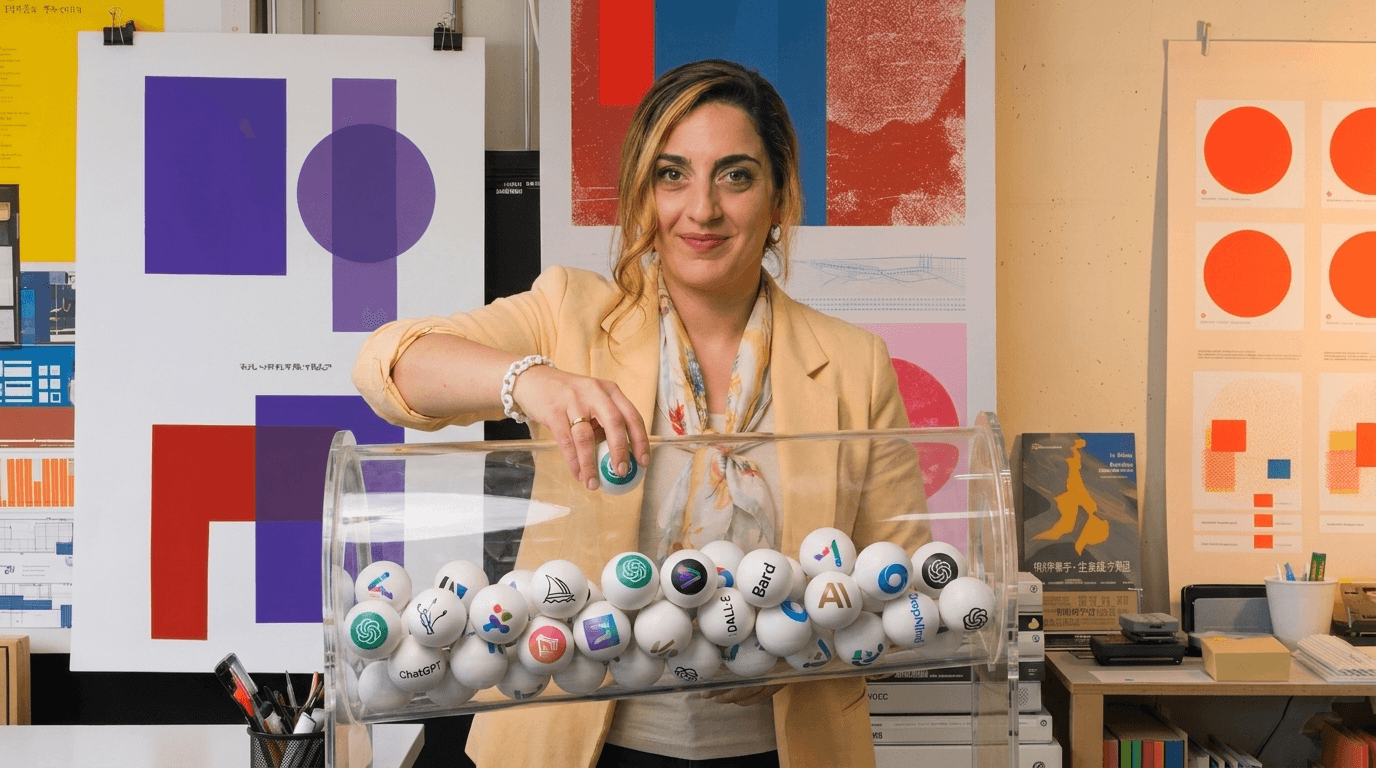
AI can write a headline in seconds.
It can generate an image before you've finished your coffee.
It can summarize a 60-page strategy document, develop campaign concepts and produce enough social content to keep a small marketing department busy until retirement.
There is one rather significant problem.
AI doesn't automatically know your brand.
It doesn't know why you chose that particular shade of blue. It doesn't know which customer segment matters most. It doesn't know that your CEO hates the word “seamless” or that your brand is confident but never smug.
Unless you teach it.
That is where AI Brand Intelligence comes in.
“AI becomes dramatically more useful when it understands the thinking behind the brand, not just the files sitting in a folder.”
Riel Bo, Creative Director
AI Brand Intelligence creates a structured layer of brand knowledge that AI can use to understand how a company thinks, communicates and creates.
It turns scattered information into something a machine can actually work with.

Defining AI Brand Intelligence
AI Brand Intelligence is the process of structuring a company's brand strategy, knowledge, messaging, creative direction and assets so AI systems can use that information to produce more accurate and on-brand work.
Think of it as giving AI a brain built specifically for your business.
That brain can contain:
Intelligence Layer | What AI Learns |
|---|---|
Brand strategy | Positioning, purpose, values and differentiation |
Audience | Customers, needs, motivations and objections |
Brand voice | Personality, tone and language |
Messaging | Core messages, claims and terminology |
Visual identity | Design principles, colors, typography and imagery |
Products | Features, benefits, use cases and positioning |
Content | Topics, formats, editorial standards and examples |
Creative direction | Concepts, campaign principles and visual direction |
Knowledge | Internal information, expertise and documentation |
Governance | What AI can create, change or approve |
The result is a much more useful relationship between your brand and AI.
Instead of asking AI to create something and hoping it understands the assignment, you give it the assignment, the context and the rules.
A radical concept, apparently.
Why Brands Need AI Intelligence
Most companies already have enormous amounts of brand knowledge.
It just tends to be scattered.
There is a brand guidelines PDF somewhere.
The latest pitch deck is in Google Drive.
The best messaging lives in an old presentation.
Customer research is sitting in another folder.
The approved photography is on a server.
The founder has strong opinions about the brand that exist entirely inside their head.
The marketing team knows things.
The sales team knows things.
The creative team knows things.
The problem is that none of this knowledge automatically becomes usable intelligence for AI.
A brand might have everything it needs to create excellent work.
AI simply doesn't know where to find it.
1. Turn Brand Guidelines Into Brand Intelligence
Traditional brand guidelines were designed primarily for humans.
They might explain logo usage, colors, typography, photography and tone of voice.
That's useful.
AI needs more context.
A useful AI brand system might explain not only what the brand looks like but why.
Traditional Brand Guideline | AI Brand Intelligence |
|---|---|
Primary logo | When and why to use it |
Color palette | Emotional role and usage |
Typography | Hierarchy, personality and context |
Brand voice | Rules, examples and reasoning |
Photography | Subject, composition and emotional direction |
Messaging | Audience, purpose and priority |
Campaign examples | Why the examples work |
Brand rules | Decision logic and exceptions |
The goal is to turn static documentation into usable intelligence.
2. Teach AI Who Your Customer Is
AI can generate content for almost any audience.
That doesn't mean it understands your audience.
There is a difference.
A useful AI brand system should understand the people you're trying to reach.
That can include:
Who they are.
What they need.
What they fear.
What motivates them.
What they already know.
What they misunderstand.
What objections they have.
What language they use.
What makes them trust a company.
That information changes the output.
A campaign written for a CFO should probably sound different from one written for a teenager buying a skateboard.
AI needs to know which one is in the room.
3. Teach AI How the Brand Sounds
Brand voice is one of the easiest things for AI to get wrong.
Ask a generic AI system to write website copy and you may receive a sentence containing:
unlock, empower, seamless, innovative and transformative.
It is a small vocabulary with a surprisingly large body count.
A strong AI brand system defines the voice with examples.
For example:
Voice Principle | What It Means | Example |
|---|---|---|
Intelligent | Knows the subject without showing off | Explain the complicated thing clearly |
Confident | Makes decisions | Avoid unnecessary hedging |
Human | Sounds like a person | Use natural language |
Playful | Lightens the mood | Use humor when appropriate |
Direct | Gets to the point | Don't bury the answer |
Expert | Demonstrates knowledge | Add useful context |
AI can then evaluate new content against those principles.
That creates consistency.
4. Give AI Access to the Brand's Knowledge
A brand's intelligence extends far beyond marketing.
It can include:
Product documentation.
Sales materials.
Customer research.
FAQs.
Training materials.
Case studies.
Industry research.
Company history.
Internal processes.
Subject matter expertise.
Previous campaigns.
Published content.
The more useful context you provide, the more useful the system becomes.
This is particularly valuable for companies with complex products.
A financial technology company may have hundreds of terms, products, regulations, customer types and use cases.
A generic AI model knows something about fintech.
A properly structured brand intelligence system knows your fintech company.
That distinction matters.
5. Build a Creative Intelligence Layer
This is where AI Brand Intelligence becomes especially interesting for creative teams.
A brand shouldn't only teach AI what it says.
It should teach AI how it thinks creatively.
That can include:
Creative principles.
Visual references.
Campaign examples.
Concept territories.
Photography direction.
Design rules.
Messaging hierarchy.
Content pillars.
Creative do's and don'ts.
Previous successful work.
Rejected directions.
Audience reactions.
This gives AI more useful creative context.
The goal isn't to make AI the creative director.
The goal is to give the creative director a much more capable assistant.
“The best AI creative system I've seen isn't trying to replace creative judgment. It's trying to make good creative judgment available earlier and more consistently.”
Riel Bo, Creative Director
That is a very different proposition.
6. Create an AI-Ready Asset Library
A folder full of files isn't necessarily an intelligent asset system.
AI needs to know what those files are.
Imagine a company has 4,000 photographs.
Which ones are approved?
Which are current?
Which represent the brand?
Which are campaign-specific?
Which can be used commercially?
Which belong to a particular audience?
Which should never be used again?
The intelligence layer can add context.
Asset | Useful AI Context |
|---|---|
Product image | Product, model, audience and use case |
Brand photography | Mood, audience and visual purpose |
Logo | Approved formats and usage |
Campaign image | Campaign, concept and message |
Illustration | Style, subject and application |
Video | Topic, audience and campaign |
Template | Channel, format and usage rules |
Now the asset library becomes searchable knowledge.
7. Build AI Workflows Around the Intelligence
Once the intelligence exists, it can power workflows.
A marketing team could use it to create:
Campaign concepts.
Social content.
Email campaigns.
Blog articles.
Sales presentations.
Product descriptions.
Ad variations.
Creative briefs.
Website copy.
Video scripts.
Image concepts.
Internal communications.
The important part is the workflow.
AI should receive the right context before it creates the output.
That means the process might look like:
Brand Intelligence → Brief → AI Generation → Human Review → Approval → Production
Instead of:
Prompt → Random Stuff → Rewrite Everything
The first system scales.
The second system creates employment for people whose primary job is fixing AI output.
8. Build Guardrails
More AI capability creates a greater need for creative governance.
Your AI system should know where the boundaries are.
For example:
What claims can be made?
Which products are approved?
Which terminology is required?
Which language is prohibited?
What visual styles are acceptable?
What customer information is confidential?
Which assets can be modified?
What requires human approval?
These rules protect the brand.
They also make AI more useful because the system has clearer boundaries.
Creative freedom works better when everyone knows where the walls are.
9. Connect Strategy to Production
This is the part that can dramatically change how marketing teams work.
Normally, strategy sits at the beginning of the process.
Then it gets translated into creative briefs.
Then creative teams interpret it.
Then content gets produced.
Then someone checks whether it still reflects the strategy.
AI Brand Intelligence can keep the strategic layer present throughout the process.
Traditional Workflow | AI-Enabled Workflow |
|---|---|
Strategy document | Structured brand intelligence |
Creative brief | AI-assisted brief |
Manual ideation | AI-assisted exploration |
Manual production | AI-assisted production |
Human review | Human creative direction |
Separate asset management | Intelligent asset system |
Periodic brand review | Continuous brand guidance |
The creative director remains responsible for judgment.
The system simply makes the strategy available throughout production.
10. Create a Single Source of Brand Truth
This may be the biggest practical benefit.
A company can have multiple teams producing content at the same time.
Marketing.
Sales.
Product.
HR.
Customer service.
PR.
Creative.
External agencies.
AI tools.
Without a shared intelligence layer, every team develops its own interpretation.
The brand slowly develops multiple personalities.
AI can accelerate that problem dramatically.
A shared brand intelligence system gives everyone the same foundation.
The goal is simple:
One brand. Many outputs.

What Does an AI Brand Intelligence System Contain?
There is no single format.
The system might combine structured documentation, knowledge bases, prompts, workflows, asset libraries, examples and AI tools.
A useful architecture could look like this:
Layer | Purpose |
|---|---|
Brand Core | Defines what the brand means |
Audience Intelligence | Defines who the brand serves |
Messaging System | Defines what the brand says |
Voice System | Defines how the brand sounds |
Visual System | Defines how the brand looks |
Knowledge Base | Stores organizational expertise |
Creative Library | Stores examples and references |
Asset Library | Stores approved creative assets |
AI Instructions | Guides AI behavior |
Workflows | Turns intelligence into production |
Governance | Controls quality and approvals |
This is much closer to an operating system than a brand guidelines document.
AI Brand Intelligence vs. AI Search Optimization
These terms are increasingly getting mixed together.
They solve different problems.
AI Brand Intelligence | AI Search Optimization |
|---|---|
Helps AI understand your brand | Helps AI discover your brand |
Supports content creation | Supports AI search visibility |
Powers creative workflows | Powers answer visibility |
Uses internal brand knowledge | Uses external authority signals |
Focuses on production | Focuses on discovery |
Supports marketing teams | Supports search and marketing teams |
Both are valuable.
They simply belong to different parts of the AI marketing ecosystem.
AI Brand Intelligence helps AI create with you.
AI Search Optimization helps AI talk about you.
That distinction is worth making.
What Are the Benefits of AI Brand Intelligence?
A properly built system can help organizations:
Produce content faster.
Improve brand consistency.
Reduce repetitive creative work.
Make better use of existing knowledge.
Scale creative production.
Reduce generic AI output.
Improve collaboration between teams.
Make brand guidelines more usable.
Speed up creative exploration.
Give teams better access to institutional knowledge.
The biggest benefit may be consistency at scale.
A small creative team can suddenly support a much larger content operation without manually creating every single piece.
That changes the economics of creative production.
What Does AI Brand Intelligence Not Do?
It doesn't magically make bad strategy good.
It doesn't replace creative judgment.
It doesn't eliminate the need for human review.
It doesn't mean every piece of content should be generated by AI.
It doesn't mean you can upload a brand book and declare victory.
The intelligence has to be structured.
The workflows have to be designed.
The system needs maintenance.
And someone needs to decide whether the work is actually good.
Fortunately, that last job remains pleasantly human.
The Role of the Creative Director Is Changing
This is where I think the biggest shift is happening.
Creative directors have traditionally managed people, ideas, production and quality.
Now they can also manage intelligent systems.
Instead of directing one designer through every variation, a creative director might direct an AI-assisted creative system.
Instead of writing every brief, they can build a framework that generates better starting points.
Instead of manually searching through thousands of assets, the team can use intelligent retrieval.
Instead of explaining the brand repeatedly, the brand intelligence system can carry that context into the workflow.
The creative director becomes less of a bottleneck and more of an orchestrator.
“The interesting future isn't AI making everything. It's creative leaders designing systems where humans and AI each do the parts they're unusually good at.”
Riel Bo, Creative Director
That is where AI becomes genuinely useful.
How to Build AI Brand Intelligence
The process usually starts with an audit.
Look at what already exists.
Collect the brand strategy.
Gather the messaging.
Review the creative work.
Analyze the audience.
Organize the knowledge.
Identify contradictions.
Define the missing pieces.
Then structure the intelligence.
After that, build the workflows and test the system against real creative tasks.
Phase | Objective |
|---|---|
Audit | Understand existing brand knowledge |
Structure | Organize the information |
Define | Establish rules and principles |
Build | Create the AI intelligence layer |
Connect | Add tools, assets and workflows |
Test | Evaluate real outputs |
Refine | Improve weak areas |
Govern | Maintain quality over time |
The system gets better as the brand learns.
That is important.
AI Brand Intelligence shouldn't be a one-time document.
It should become part of the operating system.
The Future of AI and Creative Work
We are moving toward a world where producing creative assets becomes increasingly easy.
That changes the value equation.
When anyone can generate an image, the image itself becomes less scarce.
When anyone can generate a paragraph, the paragraph becomes less valuable.
When anyone can create a campaign concept, judgment becomes more valuable.
Strategy becomes more valuable.
Brand knowledge becomes more valuable.
Creative direction becomes more valuable.
The competitive advantage moves upstream.
The question becomes:
What does your AI know about your brand that someone else's AI doesn't?
That may become one of the most important questions in modern creative operations.


Frequently Asked Questions
What is AI Brand Intelligence?
AI Brand Intelligence is a structured system of brand strategy, knowledge, messaging, creative direction, assets and rules that helps AI understand and work within a specific brand.
Is AI Brand Intelligence the same as AI optimization?
AI optimization is a broad term that can refer to several disciplines. AI Brand Intelligence specifically focuses on teaching AI how a brand thinks, communicates, looks and creates.
How is AI Brand Intelligence different from AEO?
AEO, or Answer Engine Optimization, focuses on helping AI systems discover and reference a business in generated answers. AI Brand Intelligence focuses on helping AI understand and produce work for the brand.
Can AI Brand Intelligence replace a creative director?
No. It can reduce repetitive work and make strategic information more accessible, but creative judgment, leadership and decision-making remain human responsibilities.
What information should be included?
A strong system can include brand strategy, audience research, messaging, voice guidelines, visual identity, product knowledge, creative examples, approved assets, workflows and governance rules.
Can AI Brand Intelligence work with existing brand guidelines?
Yes. Existing brand guidelines are often an excellent starting point. They can be expanded with strategic context, examples, knowledge, workflows and structured instructions that make the information more useful to AI.
Does AI Brand Intelligence help with content production?
Yes. Once properly structured, brand intelligence can support content development across channels including websites, social media, email, advertising, presentations, video and creative campaigns.
Why is AI Brand Intelligence important?
AI makes creative production dramatically faster. That increases the importance of giving AI the right strategic context so faster production doesn't simply create more generic content.
The Short Version
AI can make almost anything.
The interesting question is whether it can make something that feels unmistakably yours.
That requires more than prompts.
It requires knowledge.
Strategy.
Context.
Examples.
Rules.
Creative judgment.
AI Brand Intelligence turns those things into a system AI can actually use.
The result is a brand that can move faster without becoming generic.
And that, in my opinion, is a much more interesting future for AI than producing another 400 versions of a smiling person holding a laptop.

Join me for a coffee...
More to Discover

What Is AI Brand Intelligence?
Build a smarter brand system that gives AI the strategy, knowledge, voice and creative direction it needs to produce better work.
Insights
AI can write a headline in seconds.
It can generate an image before you've finished your coffee.
It can summarize a 60-page strategy document, develop campaign concepts and produce enough social content to keep a small marketing department busy until retirement.
There is one rather significant problem.
AI doesn't automatically know your brand.
It doesn't know why you chose that particular shade of blue. It doesn't know which customer segment matters most. It doesn't know that your CEO hates the word “seamless” or that your brand is confident but never smug.
Unless you teach it.
That is where AI Brand Intelligence comes in.
“AI becomes dramatically more useful when it understands the thinking behind the brand, not just the files sitting in a folder.”
Riel Bo, Creative Director
AI Brand Intelligence creates a structured layer of brand knowledge that AI can use to understand how a company thinks, communicates and creates.
It turns scattered information into something a machine can actually work with.
Defining AI Brand Intelligence
AI Brand Intelligence is the process of structuring a company's brand strategy, knowledge, messaging, creative direction and assets so AI systems can use that information to produce more accurate and on-brand work.
Think of it as giving AI a brain built specifically for your business.
That brain can contain:
Intelligence Layer | What AI Learns |
|---|---|
Brand strategy | Positioning, purpose, values and differentiation |
Audience | Customers, needs, motivations and objections |
Brand voice | Personality, tone and language |
Messaging | Core messages, claims and terminology |
Visual identity | Design principles, colors, typography and imagery |
Products | Features, benefits, use cases and positioning |
Content | Topics, formats, editorial standards and examples |
Creative direction | Concepts, campaign principles and visual direction |
Knowledge | Internal information, expertise and documentation |
Governance | What AI can create, change or approve |
The result is a much more useful relationship between your brand and AI.
Instead of asking AI to create something and hoping it understands the assignment, you give it the assignment, the context and the rules.
A radical concept, apparently.
Why Brands Need AI Intelligence
Most companies already have enormous amounts of brand knowledge.
It just tends to be scattered.
There is a brand guidelines PDF somewhere.
The latest pitch deck is in Google Drive.
The best messaging lives in an old presentation.
Customer research is sitting in another folder.
The approved photography is on a server.
The founder has strong opinions about the brand that exist entirely inside their head.
The marketing team knows things.
The sales team knows things.
The creative team knows things.
The problem is that none of this knowledge automatically becomes usable intelligence for AI.
A brand might have everything it needs to create excellent work.
AI simply doesn't know where to find it.
1. Turn Brand Guidelines Into Brand Intelligence
Traditional brand guidelines were designed primarily for humans.
They might explain logo usage, colors, typography, photography and tone of voice.
That's useful.
AI needs more context.
A useful AI brand system might explain not only what the brand looks like but why.
Traditional Brand Guideline | AI Brand Intelligence |
|---|---|
Primary logo | When and why to use it |
Color palette | Emotional role and usage |
Typography | Hierarchy, personality and context |
Brand voice | Rules, examples and reasoning |
Photography | Subject, composition and emotional direction |
Messaging | Audience, purpose and priority |
Campaign examples | Why the examples work |
Brand rules | Decision logic and exceptions |
The goal is to turn static documentation into usable intelligence.
2. Teach AI Who Your Customer Is
AI can generate content for almost any audience.
That doesn't mean it understands your audience.
There is a difference.
A useful AI brand system should understand the people you're trying to reach.
That can include:
Who they are.
What they need.
What they fear.
What motivates them.
What they already know.
What they misunderstand.
What objections they have.
What language they use.
What makes them trust a company.
That information changes the output.
A campaign written for a CFO should probably sound different from one written for a teenager buying a skateboard.
AI needs to know which one is in the room.
3. Teach AI How the Brand Sounds
Brand voice is one of the easiest things for AI to get wrong.
Ask a generic AI system to write website copy and you may receive a sentence containing:
unlock, empower, seamless, innovative and transformative.
It is a small vocabulary with a surprisingly large body count.
A strong AI brand system defines the voice with examples.
For example:
Voice Principle | What It Means | Example |
|---|---|---|
Intelligent | Knows the subject without showing off | Explain the complicated thing clearly |
Confident | Makes decisions | Avoid unnecessary hedging |
Human | Sounds like a person | Use natural language |
Playful | Lightens the mood | Use humor when appropriate |
Direct | Gets to the point | Don't bury the answer |
Expert | Demonstrates knowledge | Add useful context |
AI can then evaluate new content against those principles.
That creates consistency.
4. Give AI Access to the Brand's Knowledge
A brand's intelligence extends far beyond marketing.
It can include:
Product documentation.
Sales materials.
Customer research.
FAQs.
Training materials.
Case studies.
Industry research.
Company history.
Internal processes.
Subject matter expertise.
Previous campaigns.
Published content.
The more useful context you provide, the more useful the system becomes.
This is particularly valuable for companies with complex products.
A financial technology company may have hundreds of terms, products, regulations, customer types and use cases.
A generic AI model knows something about fintech.
A properly structured brand intelligence system knows your fintech company.
That distinction matters.
5. Build a Creative Intelligence Layer
This is where AI Brand Intelligence becomes especially interesting for creative teams.
A brand shouldn't only teach AI what it says.
It should teach AI how it thinks creatively.
That can include:
Creative principles.
Visual references.
Campaign examples.
Concept territories.
Photography direction.
Design rules.
Messaging hierarchy.
Content pillars.
Creative do's and don'ts.
Previous successful work.
Rejected directions.
Audience reactions.
This gives AI more useful creative context.
The goal isn't to make AI the creative director.
The goal is to give the creative director a much more capable assistant.
“The best AI creative system I've seen isn't trying to replace creative judgment. It's trying to make good creative judgment available earlier and more consistently.”
Riel Bo, Creative Director
That is a very different proposition.
6. Create an AI-Ready Asset Library
A folder full of files isn't necessarily an intelligent asset system.
AI needs to know what those files are.
Imagine a company has 4,000 photographs.
Which ones are approved?
Which are current?
Which represent the brand?
Which are campaign-specific?
Which can be used commercially?
Which belong to a particular audience?
Which should never be used again?
The intelligence layer can add context.
Asset | Useful AI Context |
|---|---|
Product image | Product, model, audience and use case |
Brand photography | Mood, audience and visual purpose |
Logo | Approved formats and usage |
Campaign image | Campaign, concept and message |
Illustration | Style, subject and application |
Video | Topic, audience and campaign |
Template | Channel, format and usage rules |
Now the asset library becomes searchable knowledge.
7. Build AI Workflows Around the Intelligence
Once the intelligence exists, it can power workflows.
A marketing team could use it to create:
Campaign concepts.
Social content.
Email campaigns.
Blog articles.
Sales presentations.
Product descriptions.
Ad variations.
Creative briefs.
Website copy.
Video scripts.
Image concepts.
Internal communications.
The important part is the workflow.
AI should receive the right context before it creates the output.
That means the process might look like:
Brand Intelligence → Brief → AI Generation → Human Review → Approval → Production
Instead of:
Prompt → Random Stuff → Rewrite Everything
The first system scales.
The second system creates employment for people whose primary job is fixing AI output.
8. Build Guardrails
More AI capability creates a greater need for creative governance.
Your AI system should know where the boundaries are.
For example:
What claims can be made?
Which products are approved?
Which terminology is required?
Which language is prohibited?
What visual styles are acceptable?
What customer information is confidential?
Which assets can be modified?
What requires human approval?
These rules protect the brand.
They also make AI more useful because the system has clearer boundaries.
Creative freedom works better when everyone knows where the walls are.
9. Connect Strategy to Production
This is the part that can dramatically change how marketing teams work.
Normally, strategy sits at the beginning of the process.
Then it gets translated into creative briefs.
Then creative teams interpret it.
Then content gets produced.
Then someone checks whether it still reflects the strategy.
AI Brand Intelligence can keep the strategic layer present throughout the process.
Traditional Workflow | AI-Enabled Workflow |
|---|---|
Strategy document | Structured brand intelligence |
Creative brief | AI-assisted brief |
Manual ideation | AI-assisted exploration |
Manual production | AI-assisted production |
Human review | Human creative direction |
Separate asset management | Intelligent asset system |
Periodic brand review | Continuous brand guidance |
The creative director remains responsible for judgment.
The system simply makes the strategy available throughout production.
10. Create a Single Source of Brand Truth
This may be the biggest practical benefit.
A company can have multiple teams producing content at the same time.
Marketing.
Sales.
Product.
HR.
Customer service.
PR.
Creative.
External agencies.
AI tools.
Without a shared intelligence layer, every team develops its own interpretation.
The brand slowly develops multiple personalities.
AI can accelerate that problem dramatically.
A shared brand intelligence system gives everyone the same foundation.
The goal is simple:
One brand. Many outputs.
What Does an AI Brand Intelligence System Contain?
There is no single format.
The system might combine structured documentation, knowledge bases, prompts, workflows, asset libraries, examples and AI tools.
A useful architecture could look like this:
Layer | Purpose |
|---|---|
Brand Core | Defines what the brand means |
Audience Intelligence | Defines who the brand serves |
Messaging System | Defines what the brand says |
Voice System | Defines how the brand sounds |
Visual System | Defines how the brand looks |
Knowledge Base | Stores organizational expertise |
Creative Library | Stores examples and references |
Asset Library | Stores approved creative assets |
AI Instructions | Guides AI behavior |
Workflows | Turns intelligence into production |
Governance | Controls quality and approvals |
This is much closer to an operating system than a brand guidelines document.
AI Brand Intelligence vs. AI Search Optimization
These terms are increasingly getting mixed together.
They solve different problems.
AI Brand Intelligence | AI Search Optimization |
|---|---|
Helps AI understand your brand | Helps AI discover your brand |
Supports content creation | Supports AI search visibility |
Powers creative workflows | Powers answer visibility |
Uses internal brand knowledge | Uses external authority signals |
Focuses on production | Focuses on discovery |
Supports marketing teams | Supports search and marketing teams |
Both are valuable.
They simply belong to different parts of the AI marketing ecosystem.
AI Brand Intelligence helps AI create with you.
AI Search Optimization helps AI talk about you.
That distinction is worth making.
What Are the Benefits of AI Brand Intelligence?
A properly built system can help organizations:
Produce content faster.
Improve brand consistency.
Reduce repetitive creative work.
Make better use of existing knowledge.
Scale creative production.
Reduce generic AI output.
Improve collaboration between teams.
Make brand guidelines more usable.
Speed up creative exploration.
Give teams better access to institutional knowledge.
The biggest benefit may be consistency at scale.
A small creative team can suddenly support a much larger content operation without manually creating every single piece.
That changes the economics of creative production.
What Does AI Brand Intelligence Not Do?
It doesn't magically make bad strategy good.
It doesn't replace creative judgment.
It doesn't eliminate the need for human review.
It doesn't mean every piece of content should be generated by AI.
It doesn't mean you can upload a brand book and declare victory.
The intelligence has to be structured.
The workflows have to be designed.
The system needs maintenance.
And someone needs to decide whether the work is actually good.
Fortunately, that last job remains pleasantly human.
The Role of the Creative Director Is Changing
This is where I think the biggest shift is happening.
Creative directors have traditionally managed people, ideas, production and quality.
Now they can also manage intelligent systems.
Instead of directing one designer through every variation, a creative director might direct an AI-assisted creative system.
Instead of writing every brief, they can build a framework that generates better starting points.
Instead of manually searching through thousands of assets, the team can use intelligent retrieval.
Instead of explaining the brand repeatedly, the brand intelligence system can carry that context into the workflow.
The creative director becomes less of a bottleneck and more of an orchestrator.
“The interesting future isn't AI making everything. It's creative leaders designing systems where humans and AI each do the parts they're unusually good at.”
Riel Bo, Creative Director
That is where AI becomes genuinely useful.
How to Build AI Brand Intelligence
The process usually starts with an audit.
Look at what already exists.
Collect the brand strategy.
Gather the messaging.
Review the creative work.
Analyze the audience.
Organize the knowledge.
Identify contradictions.
Define the missing pieces.
Then structure the intelligence.
After that, build the workflows and test the system against real creative tasks.
Phase | Objective |
|---|---|
Audit | Understand existing brand knowledge |
Structure | Organize the information |
Define | Establish rules and principles |
Build | Create the AI intelligence layer |
Connect | Add tools, assets and workflows |
Test | Evaluate real outputs |
Refine | Improve weak areas |
Govern | Maintain quality over time |
The system gets better as the brand learns.
That is important.
AI Brand Intelligence shouldn't be a one-time document.
It should become part of the operating system.
The Future of AI and Creative Work
We are moving toward a world where producing creative assets becomes increasingly easy.
That changes the value equation.
When anyone can generate an image, the image itself becomes less scarce.
When anyone can generate a paragraph, the paragraph becomes less valuable.
When anyone can create a campaign concept, judgment becomes more valuable.
Strategy becomes more valuable.
Brand knowledge becomes more valuable.
Creative direction becomes more valuable.
The competitive advantage moves upstream.
The question becomes:
What does your AI know about your brand that someone else's AI doesn't?
That may become one of the most important questions in modern creative operations.
Frequently Asked Questions
What is AI Brand Intelligence?
AI Brand Intelligence is a structured system of brand strategy, knowledge, messaging, creative direction, assets and rules that helps AI understand and work within a specific brand.
Is AI Brand Intelligence the same as AI optimization?
AI optimization is a broad term that can refer to several disciplines. AI Brand Intelligence specifically focuses on teaching AI how a brand thinks, communicates, looks and creates.
How is AI Brand Intelligence different from AEO?
AEO, or Answer Engine Optimization, focuses on helping AI systems discover and reference a business in generated answers. AI Brand Intelligence focuses on helping AI understand and produce work for the brand.
Can AI Brand Intelligence replace a creative director?
No. It can reduce repetitive work and make strategic information more accessible, but creative judgment, leadership and decision-making remain human responsibilities.
What information should be included?
A strong system can include brand strategy, audience research, messaging, voice guidelines, visual identity, product knowledge, creative examples, approved assets, workflows and governance rules.
Can AI Brand Intelligence work with existing brand guidelines?
Yes. Existing brand guidelines are often an excellent starting point. They can be expanded with strategic context, examples, knowledge, workflows and structured instructions that make the information more useful to AI.
Does AI Brand Intelligence help with content production?
Yes. Once properly structured, brand intelligence can support content development across channels including websites, social media, email, advertising, presentations, video and creative campaigns.
Why is AI Brand Intelligence important?
AI makes creative production dramatically faster. That increases the importance of giving AI the right strategic context so faster production doesn't simply create more generic content.
The Short Version
AI can make almost anything.
The interesting question is whether it can make something that feels unmistakably yours.
That requires more than prompts.
It requires knowledge.
Strategy.
Context.
Examples.
Rules.
Creative judgment.
AI Brand Intelligence turns those things into a system AI can actually use.
The result is a brand that can move faster without becoming generic.
And that, in my opinion, is a much more interesting future for AI than producing another 400 versions of a smiling person holding a laptop.
Join me for a coffee...
More to Discover
What Is AI Brand Intelligence?
Build a smarter brand system that gives AI the strategy, knowledge, voice and creative direction it needs to produce better work.
Insights
AI can write a headline in seconds.
It can generate an image before you've finished your coffee.
It can summarize a 60-page strategy document, develop campaign concepts and produce enough social content to keep a small marketing department busy until retirement.
There is one rather significant problem.
AI doesn't automatically know your brand.
It doesn't know why you chose that particular shade of blue. It doesn't know which customer segment matters most. It doesn't know that your CEO hates the word “seamless” or that your brand is confident but never smug.
Unless you teach it.
That is where AI Brand Intelligence comes in.
“AI becomes dramatically more useful when it understands the thinking behind the brand, not just the files sitting in a folder.”
Riel Bo, Creative Director
AI Brand Intelligence creates a structured layer of brand knowledge that AI can use to understand how a company thinks, communicates and creates.
It turns scattered information into something a machine can actually work with.
Defining AI Brand Intelligence
AI Brand Intelligence is the process of structuring a company's brand strategy, knowledge, messaging, creative direction and assets so AI systems can use that information to produce more accurate and on-brand work.
Think of it as giving AI a brain built specifically for your business.
That brain can contain:
Intelligence Layer | What AI Learns |
|---|---|
Brand strategy | Positioning, purpose, values and differentiation |
Audience | Customers, needs, motivations and objections |
Brand voice | Personality, tone and language |
Messaging | Core messages, claims and terminology |
Visual identity | Design principles, colors, typography and imagery |
Products | Features, benefits, use cases and positioning |
Content | Topics, formats, editorial standards and examples |
Creative direction | Concepts, campaign principles and visual direction |
Knowledge | Internal information, expertise and documentation |
Governance | What AI can create, change or approve |
The result is a much more useful relationship between your brand and AI.
Instead of asking AI to create something and hoping it understands the assignment, you give it the assignment, the context and the rules.
A radical concept, apparently.
Why Brands Need AI Intelligence
Most companies already have enormous amounts of brand knowledge.
It just tends to be scattered.
There is a brand guidelines PDF somewhere.
The latest pitch deck is in Google Drive.
The best messaging lives in an old presentation.
Customer research is sitting in another folder.
The approved photography is on a server.
The founder has strong opinions about the brand that exist entirely inside their head.
The marketing team knows things.
The sales team knows things.
The creative team knows things.
The problem is that none of this knowledge automatically becomes usable intelligence for AI.
A brand might have everything it needs to create excellent work.
AI simply doesn't know where to find it.
1. Turn Brand Guidelines Into Brand Intelligence
Traditional brand guidelines were designed primarily for humans.
They might explain logo usage, colors, typography, photography and tone of voice.
That's useful.
AI needs more context.
A useful AI brand system might explain not only what the brand looks like but why.
Traditional Brand Guideline | AI Brand Intelligence |
|---|---|
Primary logo | When and why to use it |
Color palette | Emotional role and usage |
Typography | Hierarchy, personality and context |
Brand voice | Rules, examples and reasoning |
Photography | Subject, composition and emotional direction |
Messaging | Audience, purpose and priority |
Campaign examples | Why the examples work |
Brand rules | Decision logic and exceptions |
The goal is to turn static documentation into usable intelligence.
2. Teach AI Who Your Customer Is
AI can generate content for almost any audience.
That doesn't mean it understands your audience.
There is a difference.
A useful AI brand system should understand the people you're trying to reach.
That can include:
Who they are.
What they need.
What they fear.
What motivates them.
What they already know.
What they misunderstand.
What objections they have.
What language they use.
What makes them trust a company.
That information changes the output.
A campaign written for a CFO should probably sound different from one written for a teenager buying a skateboard.
AI needs to know which one is in the room.
3. Teach AI How the Brand Sounds
Brand voice is one of the easiest things for AI to get wrong.
Ask a generic AI system to write website copy and you may receive a sentence containing:
unlock, empower, seamless, innovative and transformative.
It is a small vocabulary with a surprisingly large body count.
A strong AI brand system defines the voice with examples.
For example:
Voice Principle | What It Means | Example |
|---|---|---|
Intelligent | Knows the subject without showing off | Explain the complicated thing clearly |
Confident | Makes decisions | Avoid unnecessary hedging |
Human | Sounds like a person | Use natural language |
Playful | Lightens the mood | Use humor when appropriate |
Direct | Gets to the point | Don't bury the answer |
Expert | Demonstrates knowledge | Add useful context |
AI can then evaluate new content against those principles.
That creates consistency.
4. Give AI Access to the Brand's Knowledge
A brand's intelligence extends far beyond marketing.
It can include:
Product documentation.
Sales materials.
Customer research.
FAQs.
Training materials.
Case studies.
Industry research.
Company history.
Internal processes.
Subject matter expertise.
Previous campaigns.
Published content.
The more useful context you provide, the more useful the system becomes.
This is particularly valuable for companies with complex products.
A financial technology company may have hundreds of terms, products, regulations, customer types and use cases.
A generic AI model knows something about fintech.
A properly structured brand intelligence system knows your fintech company.
That distinction matters.
5. Build a Creative Intelligence Layer
This is where AI Brand Intelligence becomes especially interesting for creative teams.
A brand shouldn't only teach AI what it says.
It should teach AI how it thinks creatively.
That can include:
Creative principles.
Visual references.
Campaign examples.
Concept territories.
Photography direction.
Design rules.
Messaging hierarchy.
Content pillars.
Creative do's and don'ts.
Previous successful work.
Rejected directions.
Audience reactions.
This gives AI more useful creative context.
The goal isn't to make AI the creative director.
The goal is to give the creative director a much more capable assistant.
“The best AI creative system I've seen isn't trying to replace creative judgment. It's trying to make good creative judgment available earlier and more consistently.”
Riel Bo, Creative Director
That is a very different proposition.
6. Create an AI-Ready Asset Library
A folder full of files isn't necessarily an intelligent asset system.
AI needs to know what those files are.
Imagine a company has 4,000 photographs.
Which ones are approved?
Which are current?
Which represent the brand?
Which are campaign-specific?
Which can be used commercially?
Which belong to a particular audience?
Which should never be used again?
The intelligence layer can add context.
Asset | Useful AI Context |
|---|---|
Product image | Product, model, audience and use case |
Brand photography | Mood, audience and visual purpose |
Logo | Approved formats and usage |
Campaign image | Campaign, concept and message |
Illustration | Style, subject and application |
Video | Topic, audience and campaign |
Template | Channel, format and usage rules |
Now the asset library becomes searchable knowledge.
7. Build AI Workflows Around the Intelligence
Once the intelligence exists, it can power workflows.
A marketing team could use it to create:
Campaign concepts.
Social content.
Email campaigns.
Blog articles.
Sales presentations.
Product descriptions.
Ad variations.
Creative briefs.
Website copy.
Video scripts.
Image concepts.
Internal communications.
The important part is the workflow.
AI should receive the right context before it creates the output.
That means the process might look like:
Brand Intelligence → Brief → AI Generation → Human Review → Approval → Production
Instead of:
Prompt → Random Stuff → Rewrite Everything
The first system scales.
The second system creates employment for people whose primary job is fixing AI output.
8. Build Guardrails
More AI capability creates a greater need for creative governance.
Your AI system should know where the boundaries are.
For example:
What claims can be made?
Which products are approved?
Which terminology is required?
Which language is prohibited?
What visual styles are acceptable?
What customer information is confidential?
Which assets can be modified?
What requires human approval?
These rules protect the brand.
They also make AI more useful because the system has clearer boundaries.
Creative freedom works better when everyone knows where the walls are.
9. Connect Strategy to Production
This is the part that can dramatically change how marketing teams work.
Normally, strategy sits at the beginning of the process.
Then it gets translated into creative briefs.
Then creative teams interpret it.
Then content gets produced.
Then someone checks whether it still reflects the strategy.
AI Brand Intelligence can keep the strategic layer present throughout the process.
Traditional Workflow | AI-Enabled Workflow |
|---|---|
Strategy document | Structured brand intelligence |
Creative brief | AI-assisted brief |
Manual ideation | AI-assisted exploration |
Manual production | AI-assisted production |
Human review | Human creative direction |
Separate asset management | Intelligent asset system |
Periodic brand review | Continuous brand guidance |
The creative director remains responsible for judgment.
The system simply makes the strategy available throughout production.
10. Create a Single Source of Brand Truth
This may be the biggest practical benefit.
A company can have multiple teams producing content at the same time.
Marketing.
Sales.
Product.
HR.
Customer service.
PR.
Creative.
External agencies.
AI tools.
Without a shared intelligence layer, every team develops its own interpretation.
The brand slowly develops multiple personalities.
AI can accelerate that problem dramatically.
A shared brand intelligence system gives everyone the same foundation.
The goal is simple:
One brand. Many outputs.
What Does an AI Brand Intelligence System Contain?
There is no single format.
The system might combine structured documentation, knowledge bases, prompts, workflows, asset libraries, examples and AI tools.
A useful architecture could look like this:
Layer | Purpose |
|---|---|
Brand Core | Defines what the brand means |
Audience Intelligence | Defines who the brand serves |
Messaging System | Defines what the brand says |
Voice System | Defines how the brand sounds |
Visual System | Defines how the brand looks |
Knowledge Base | Stores organizational expertise |
Creative Library | Stores examples and references |
Asset Library | Stores approved creative assets |
AI Instructions | Guides AI behavior |
Workflows | Turns intelligence into production |
Governance | Controls quality and approvals |
This is much closer to an operating system than a brand guidelines document.
AI Brand Intelligence vs. AI Search Optimization
These terms are increasingly getting mixed together.
They solve different problems.
AI Brand Intelligence | AI Search Optimization |
|---|---|
Helps AI understand your brand | Helps AI discover your brand |
Supports content creation | Supports AI search visibility |
Powers creative workflows | Powers answer visibility |
Uses internal brand knowledge | Uses external authority signals |
Focuses on production | Focuses on discovery |
Supports marketing teams | Supports search and marketing teams |
Both are valuable.
They simply belong to different parts of the AI marketing ecosystem.
AI Brand Intelligence helps AI create with you.
AI Search Optimization helps AI talk about you.
That distinction is worth making.
What Are the Benefits of AI Brand Intelligence?
A properly built system can help organizations:
Produce content faster.
Improve brand consistency.
Reduce repetitive creative work.
Make better use of existing knowledge.
Scale creative production.
Reduce generic AI output.
Improve collaboration between teams.
Make brand guidelines more usable.
Speed up creative exploration.
Give teams better access to institutional knowledge.
The biggest benefit may be consistency at scale.
A small creative team can suddenly support a much larger content operation without manually creating every single piece.
That changes the economics of creative production.
What Does AI Brand Intelligence Not Do?
It doesn't magically make bad strategy good.
It doesn't replace creative judgment.
It doesn't eliminate the need for human review.
It doesn't mean every piece of content should be generated by AI.
It doesn't mean you can upload a brand book and declare victory.
The intelligence has to be structured.
The workflows have to be designed.
The system needs maintenance.
And someone needs to decide whether the work is actually good.
Fortunately, that last job remains pleasantly human.
The Role of the Creative Director Is Changing
This is where I think the biggest shift is happening.
Creative directors have traditionally managed people, ideas, production and quality.
Now they can also manage intelligent systems.
Instead of directing one designer through every variation, a creative director might direct an AI-assisted creative system.
Instead of writing every brief, they can build a framework that generates better starting points.
Instead of manually searching through thousands of assets, the team can use intelligent retrieval.
Instead of explaining the brand repeatedly, the brand intelligence system can carry that context into the workflow.
The creative director becomes less of a bottleneck and more of an orchestrator.
“The interesting future isn't AI making everything. It's creative leaders designing systems where humans and AI each do the parts they're unusually good at.”
Riel Bo, Creative Director
That is where AI becomes genuinely useful.
How to Build AI Brand Intelligence
The process usually starts with an audit.
Look at what already exists.
Collect the brand strategy.
Gather the messaging.
Review the creative work.
Analyze the audience.
Organize the knowledge.
Identify contradictions.
Define the missing pieces.
Then structure the intelligence.
After that, build the workflows and test the system against real creative tasks.
Phase | Objective |
|---|---|
Audit | Understand existing brand knowledge |
Structure | Organize the information |
Define | Establish rules and principles |
Build | Create the AI intelligence layer |
Connect | Add tools, assets and workflows |
Test | Evaluate real outputs |
Refine | Improve weak areas |
Govern | Maintain quality over time |
The system gets better as the brand learns.
That is important.
AI Brand Intelligence shouldn't be a one-time document.
It should become part of the operating system.
The Future of AI and Creative Work
We are moving toward a world where producing creative assets becomes increasingly easy.
That changes the value equation.
When anyone can generate an image, the image itself becomes less scarce.
When anyone can generate a paragraph, the paragraph becomes less valuable.
When anyone can create a campaign concept, judgment becomes more valuable.
Strategy becomes more valuable.
Brand knowledge becomes more valuable.
Creative direction becomes more valuable.
The competitive advantage moves upstream.
The question becomes:
What does your AI know about your brand that someone else's AI doesn't?
That may become one of the most important questions in modern creative operations.
Frequently Asked Questions
What is AI Brand Intelligence?
AI Brand Intelligence is a structured system of brand strategy, knowledge, messaging, creative direction, assets and rules that helps AI understand and work within a specific brand.
Is AI Brand Intelligence the same as AI optimization?
AI optimization is a broad term that can refer to several disciplines. AI Brand Intelligence specifically focuses on teaching AI how a brand thinks, communicates, looks and creates.
How is AI Brand Intelligence different from AEO?
AEO, or Answer Engine Optimization, focuses on helping AI systems discover and reference a business in generated answers. AI Brand Intelligence focuses on helping AI understand and produce work for the brand.
Can AI Brand Intelligence replace a creative director?
No. It can reduce repetitive work and make strategic information more accessible, but creative judgment, leadership and decision-making remain human responsibilities.
What information should be included?
A strong system can include brand strategy, audience research, messaging, voice guidelines, visual identity, product knowledge, creative examples, approved assets, workflows and governance rules.
Can AI Brand Intelligence work with existing brand guidelines?
Yes. Existing brand guidelines are often an excellent starting point. They can be expanded with strategic context, examples, knowledge, workflows and structured instructions that make the information more useful to AI.
Does AI Brand Intelligence help with content production?
Yes. Once properly structured, brand intelligence can support content development across channels including websites, social media, email, advertising, presentations, video and creative campaigns.
Why is AI Brand Intelligence important?
AI makes creative production dramatically faster. That increases the importance of giving AI the right strategic context so faster production doesn't simply create more generic content.
The Short Version
AI can make almost anything.
The interesting question is whether it can make something that feels unmistakably yours.
That requires more than prompts.
It requires knowledge.
Strategy.
Context.
Examples.
Rules.
Creative judgment.
AI Brand Intelligence turns those things into a system AI can actually use.
The result is a brand that can move faster without becoming generic.
And that, in my opinion, is a much more interesting future for AI than producing another 400 versions of a smiling person holding a laptop.